
The sound of an athletic career shattering in an instant is a sudden, sickening pop: the sound of a snapped tendon. In Nigeria, Achilles tendon rupture is no longer just an unfortunate sports injury—it is a full-blown public health and economic crisis that is systematically robbing millions of young athletes and active citizens of their livelihoods while orthopedic care pathways look the other way.
"I was shifting past a defender during a weekend match in Enugu when I heard a loud pop behind my left ankle. I fell, looking around to see who kicked me from behind, but no one was there. The local bone setter massaged it and applied hot herbs for months, but my heel remained completely dead. By the time I reached a specialist in Lagos, the tissue had retracted. A custom functional orthotic boot finally gave me my stride back. I am not playing professional football again, but my life is no longer trapped. — Chidi, Anambra"
While traditional bone setters worsen soft-tissue damage with aggressive manipulation and public health facilities impose long surgical waiting lists, a simple, highly effective intervention remains virtually invisible in Nigerian sports medicine protocols: accelerated functional rehabilitation using adjustable orthotic boots. Achilles tendon ruptures affect a substantial percentage of active Nigerians between twenty and fifty, driven by poor pitch conditions, a lack of structured athletic conditioning, and an increase in recreational "weekend warrior" sports activities. Yet, the typical patient trajectory moves directly from traditional mismanagement to permanent elongation of the tendon, muscle wasting, and lifelong limping. We are ignoring a precise biomechanical solution to a mechanical tear. An adjustable, motion-restricted orthosis works by physically approximating the torn tendon edges without surgical tension, providing immediate architectural protection that passive plaster casting can never replicate.
The Three Structural Barriers: Why Nigerian Athletes Continue to Limp
To understand why millions of promising sports talents and working adults remain crippled by a treatable tendon injury, we must look at the three system failures that keep specialized orthotic recovery out of reach. These are the discrete truths that dictate the daily struggle of the injured patient.
| The Barrier | The Impact on the Patient | The OrthoNarra Mandate |
|---|---|---|
| The Bone Setter Monopoly | Aggressive massage and heat application completely tear partially healed tendon fibers, causing permanent lengthening. | Retraining community health workers to spot acute soft-tissue ruptures and ban manipulation. |
| The Rigid Plaster Bias | Hospitals rely on heavy, non-adjustable plaster of Paris (POP) casts, inducing severe calf muscle atrophy and joint stiffness. | Standardizing early weight-bearing protocols using variable-wedge orthotic boots across clinics. |
| The Career Resignation | Athletes assume a ruptured tendon means immediate retirement, descending into depression and financial dependency. | Sports advocacy demonstrating that controlled, engineered mechanical loading safely restores high-performance mobility. |
"An adjustable orthotic boot does mechanically what a surgeon attempts stitch by stitch: it brings the severed ends of the Achilles tendon together by controlling the angle of the foot. In Nigeria, waiting for expensive microscopic tendon reconstruction is a luxury for the 1%; distributing functional orthoses is the common-sense solution for the 99%."
The Mechanics of Relief: How the Orthosis Changes the Equation
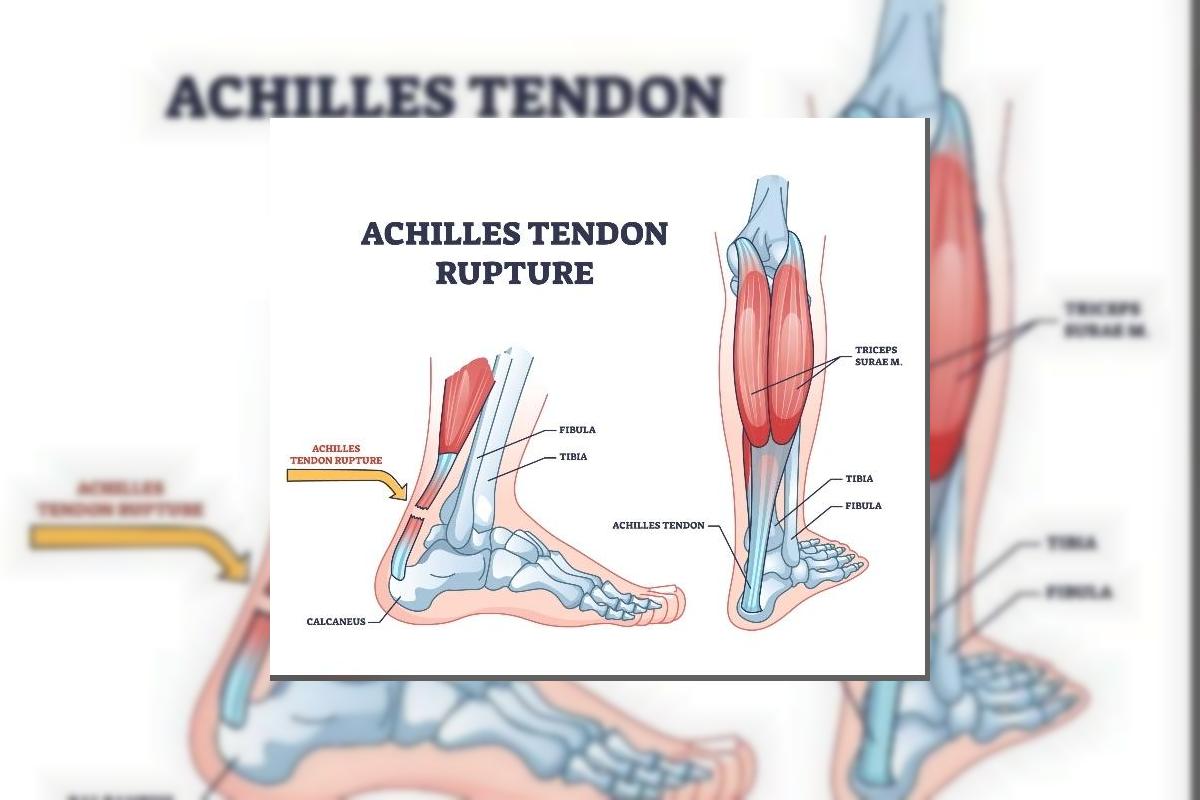
The Achilles tendon is the thickest, strongest tendon in the human body, connecting the calf muscles (triceps surae) to the heel bone (calcaneus). When it ruptures, the pull of the calf muscles drags the top half of the tendon upward, creating a hollow gap. This is where the adjustable functional orthotic boot changes everything. By locking the foot in a downward position—known as equinus or plantarflexion—the brace safely brings the torn ends back into contact. As the tissue knits together over several weeks, internal dials on the boot gradually bring the foot back to normal alignment. The results are immediate: tension on the healing tissue is eliminated, muscle activity is safely maintained, and the patient can walk during recovery. It is not magic; it is basic physics applied directly to human anatomy.
The Five Concrete Benefits of Early Orthotic Intervention
When a precise orthotic protocol is introduced during the early stages of an Achilles rupture, it yields five undeniable clinical and socio-economic outcomes:
1 Elimination of Cast Sickness
By bypassing standard, heavy plaster casts, patients avoid deep vein thrombosis (blood clots), extreme joint stiffness, and severe skin breakdown associated with weeks of immobility.
2 Controlled Tendon Fiber Alignment
Tendon tissue requires progressive, calculated tension to heal with high tensile strength. An adjustable brace ensures fibers heal in straight, parallel lines rather than weak, disorganized scars.
3 Preservation of Calf Muscle Volume
When an ankle is completely frozen in plaster, the calf muscle wastes away rapidly. An orthotic boot allows micro-movements during early weight-bearing, saving months of painful rehabilitation.
4 Safe Non-Surgical Healing
For everyday citizens and recreational athletes, a strict functional bracing protocol achieves re-rupture rates equal to or lower than open surgery, eliminating the risk of hospital-acquired wound infections.
5 Restoration of Career and Economic Dignity
An athlete or breadwinner who can bear weight early can return to their training, desk job, or marketplace business within weeks rather than being bedridden for half a year, preserving financial independence.
The Medical Blindspot: Plaster Casting vs. Mechanical Alignment
The deep forest green and terracotta palette of this series reflects our return to functional, grounded solutions. We must transition away from the institutional reliance on total immobilisation toward dynamic, mechanical support that respects the body’s natural architecture.
| The Rigid Plaster Loop (The Present) | The Orthotic Pathway (The Future) |
|---|---|
| Eight weeks of rigid plaster casting causing permanent ankle stiffness. | Applying an adjustable-angle orthotic boot in the first 48 hours. |
| Severe muscle wasting and prolonged recovery timelines. | Early controlled weight-bearing to protect calf muscle volume. |
| High risk of elongated tendon healing, leading to a permanent limp. | Gradual wedge removal to slowly guide the tendon back to perfect tension. |
| Devastating financial loss due to prolonged absence from work or sport. | A targeted, functional investment that accelerates the return to economic life. |
The current clinical status quo in Nigeria is unacceptable. We cannot allow millions of our active youths and workers to be sidelined, watching their dreams and bodies deteriorate, simply because our medical system views orthotic boots as secondary accessories rather than primary orthopaedic treatments. An Achilles tendon rupture is a structural breakdown, and structural breakdowns require engineering solutions. It is time to reform our emergency room protocols, train our local sports coaches in acute injury screening, and make functional walking orthoses widely accessible.
A Call to Action
To the athletes: A sudden pop behind your heel is not a career death sentence or an issue for a traditional massager; demand to see a prosthetic and orthotic specialist immediately before muscle wasting sets in. To the sports clinicians: Look beyond the plaster roll; evaluate the mechanical gap in your patient’s ankle and refer them for functional bracing early. To the sports federations: Subsidizing orthotic trauma care kits across local sports councils will save millions in lost talent and medical evacuations. The terracotta in our palette is the dust of our land, but it is also the foundation we walk upon. OrthoNarra will keep pushing the boundaries of medical education until every injured Nigerian can stand firm, protect their tendon, and walk with dignity. Mobility is the bedrock of our independence.
Comments (0)
No comments yet. Be the first!
Please login to leave a comment
Login to Comment