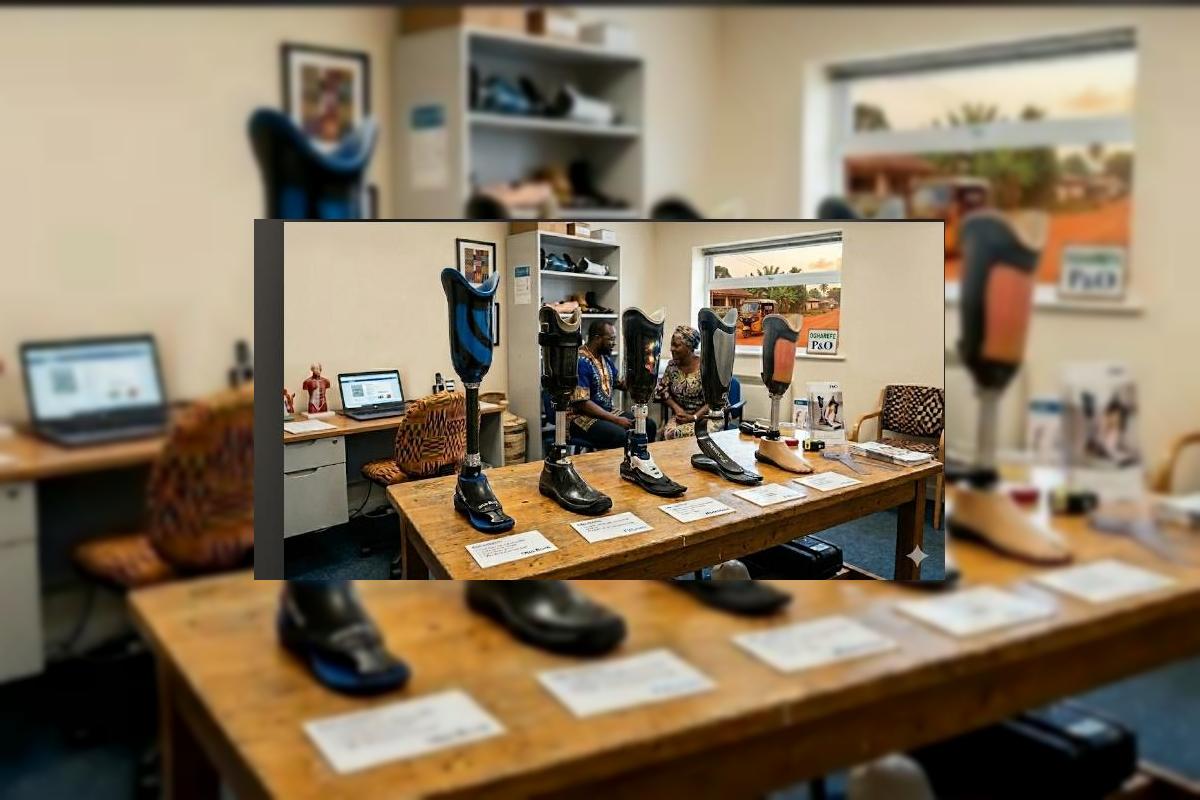

Emeka survived the accident. He survived the surgery. What he could not survive not without scars was the silence that followed. No referral, No prosthetic assessment,No plan. Just a man, a stump, and a system that had already moved on.
Emeka's Story
His name is Emeka though for the purposes of this story, that is not his real name. He is thirty one years old. He was a commercial transport driver working the Lagos Ibadan corridor, a route that Nigerian road safety statistics have long flagged as one of the most dangerous stretches of highway in West Africa. On a Tuesday morning in 2022, a loaded articulated truck lost control near the Sagamu interchange and crushed the front cabin of the bus Emeka was driving. He was the only one who did not walk away.
He was taken to a state general hospital by other drivers. By the time the surgeons assessed him, the damage to his right lower leg was irreversible traumatic amputation below the knee, confirmed intraoperatively. The surgery was performed within hours. The medical team did what trauma medicine required: they saved his life, closed the wound, and managed infection in the days that followed. The care, by the hospital's capacity, was competent.
Then Emeka was discharged. And the system, having done its defined job, moved on.
What Happens After the Surgery Or Doesn't
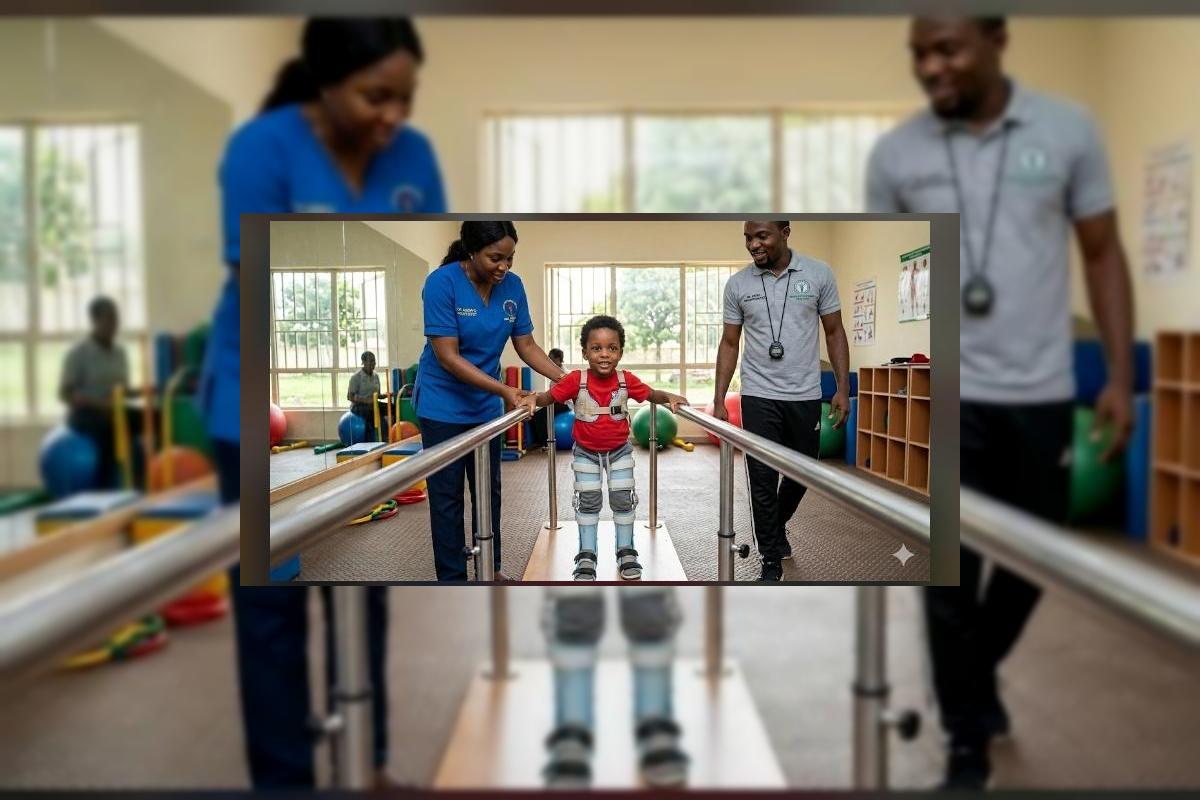
In a well functioning rehabilitation pathway, the moment a patient's surgical wound stabilises following a lower limb amputation, a chain of specialist involvement should begin. A prosthetist should assess the residual limb its shape, length, tissue quality, skin integrity and begin planning for a prosthetic fitting. A physiotherapist should initiate pre prosthetic rehabilitation: strengthening the residual limb, building core stability, training balance, managing phantom limb pain, and preparing the patient mentally and physically for the work ahead. A psychologist or counsellor, where available, should address the grief, shock, and identity disruption that limb loss almost universally triggers.
None of this happened for Emeka. Not because the professionals did not exist somewhere in the country, they did. But because the hospital where he was treated had no functional prosthetics and orthotics unit, no documented referral pathway to one, and no staff member whose job it was to bridge that gap for him. He received a discharge letter, a prescription for analgesics, and a follow up date for wound review.
Then he asked the ward nurse about a "leg replacement" the language most lay Nigerians use for prostheses she told him to ask the doctor. The doctor told him to look for a place that makes them in Lagos. Nobody wrote anything down. Nobody gave him a name, an address, a budget estimate, or a timeline. He left the hospital on crutches, and went home to his family in Ijebu Ode, where he would spend the next fourteen months trying to figure out, entirely on his own, whether a prosthetic limb was something he could ever actually obtain.
The Search Nobody Should Have to Make Alone
What followed those fourteen months was, in Emeka's words, "a second type of suffering." The first had been physical the accident, the surgery, the phantom pain that woke him screaming at 2 a.m. in the weeks after the operation. The second was the exhausting, demoralising, often humiliating process of navigating a system that had no clear door for someone in his situation.
He asked at a physiotherapy clinic in Ijebu Ode; they treated musculoskeletal conditions and did not handle amputees. He travelled to Lagos and visited a private orthopaedic hospital in Surulere, where he was told that prosthetics were not fabricated on site but could be "arranged." The cost quoted to him for a basic below knee prosthesis a transtibial prosthesis with a SACH foot, the most entry level option available was ₦600,000. He had not driven a bus in over a year. His savings had been consumed by his initial hospitalisation. His family had been supporting him from their own limited income.
₦600,000 was an impossible number.
Why Prosthetic Costs Are Out of Reach for Most Nigerians
- A basic transtibial (below-knee) prosthesis costs between ₦600,000-₦6,000,000 depending on components and clinic location.
- Imported components like socket liners, prosthetic feet, alignment hardware are priced in foreign currency, making costs volatile with the naira.
- Most state hospitals either lack a prosthetics unit entirely or have severely limited stock of fabrication materials.
- The NHIA does not reliably cover prosthetic devices under most active health insurance schemes.
- There are no government subsidised prosthetic programmes operating at scale in Nigeria as of 2026.
- NGO support exists but is inconsistent, geographically concentrated, and overwhelmed by demand.
Fourteen Months of Waiting to Be Human Again
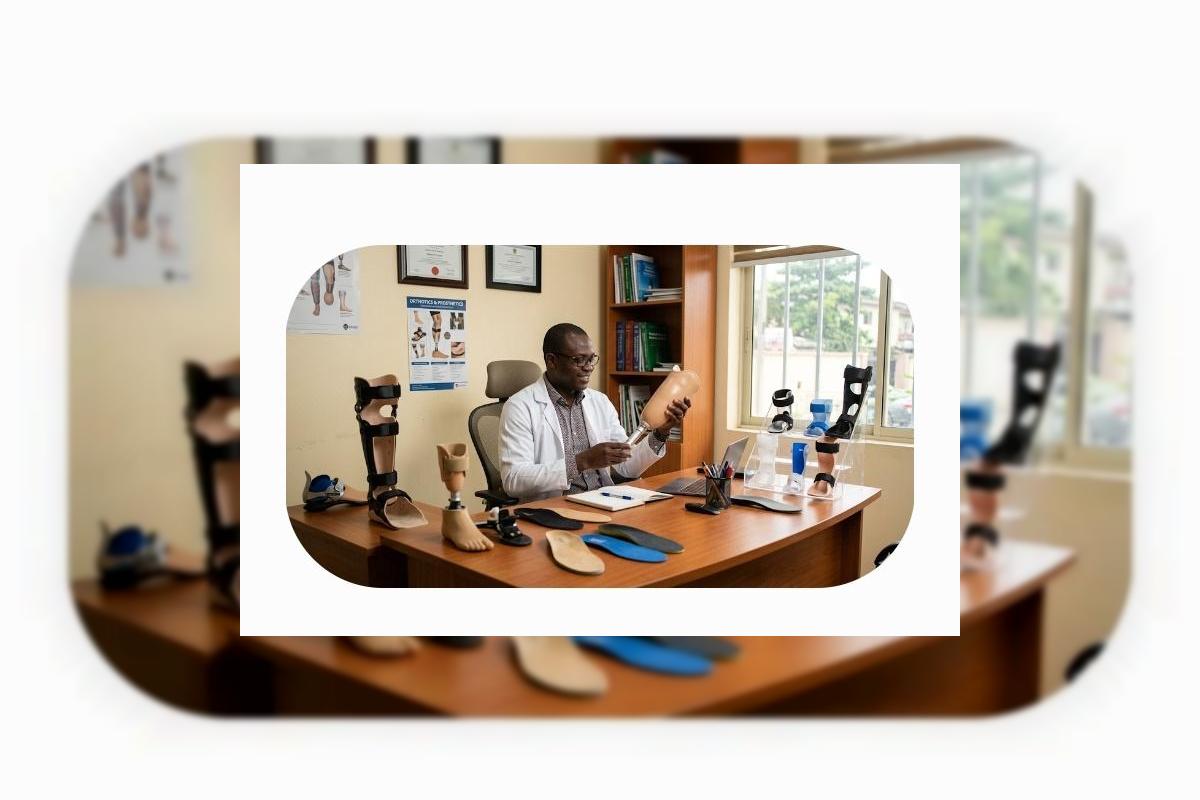
It was a distant relative a nurse working at a Federal Medical Centre in a neighbouring state who eventually pointed Emeka toward a private P&O clinic that offered a payment arrangement. He made the journey. The clinic's prosthetist examined his residual limb, now over a year post surgery, and found what many delayed fittings produce: significant limb shrinkage, skin adherence at the distal end, and early flexion contracture at the knee. These were complications not of the original surgery, but of fourteen months without proper rehabilitation. They would require additional pre prosthetic therapy before fitting could proceed.
More time. More cost. More waiting.
But Emeka waited. He did the exercises. He attended the therapy sessions. He made the payments in instalments that took everything he and his family could spare. And one months after walking into that clinic for the first time, he walked out of it on two legs.
He said the first time he stood without crutches and felt the floor under both feet again even through a socket, even through carbon and plastic he stood in the clinic corridor and wept. Not from pain. From something he had not allowed himself to feel for two years: the possibility that his life could continue.
One Story, Thousands of Faces
Emeka's story is not exceptional. That is the most important thing to understand about it. Road traffic accidents remain the leading cause of traumatic amputation in Nigeria, and the country records some of the highest road accident fatality rates in Africa. The survivors; those who lose limbs and live enter a rehabilitation pipeline that in the majority of Nigerian states, barely exists.
The pattern is consistent across the country: surgical intervention happens, often competently. The post surgical rehabilitation pathway is the part that determines whether a patient regains function and quality of life either does not exist where the patient is, or exists at a cost the patient cannot bear, or is never communicated to them at all. The result is thousands of Emekas: people who survived the worst moment of their lives, only to spend years navigating a system that had no roadmap for what came next.
What Should Change And What Must
Emeka's story does not require a miracle to fix. It requires a system. It requires that every trauma and orthopaedic ward in every state hospital have a documented, functioning referral pathway to a P&O service whether in house or external. It requires that prosthetists and orthotists be embedded in multidisciplinary rehabilitation teams, not treated as optional extras. It requires that the NHIA's benefit framework explicitly and meaningfully cover prosthetic devices. It requires that the Federal Ministry of Health treat post surgical rehabilitation as part of the surgical episode of care, not as a separate luxury that patients must fund themselves.
None of these are impossible demands. They are the baseline standard in dozens of countries with healthcare systems no wealthier than Nigeria's countries that simply decided, at a policy level, that surviving an accident was not the finish line. Getting back to life was.
Emeka drives again now not commercially, not yet, but locally. He coaches young men in his neighbourhood who want to learn. He moves through the world on a prosthetic limb that he waited two years and paid everything he had to obtain. He should not have had to wait. He should not have had to pay alone. And the next person in that hospital corridor, clutching crutches and a discharge letter with no plan, should not have to either.
A NOTE ON THIS STORY
The name and some identifying details in this story have been changed to protect privacy. The clinical and systemic details reflect documented realities of P&O care access in Nigeria. Emeka's journey the delayed referral, the cost barriers, the complications of late fitting, and the eventual recovery represents a pattern that P&O practitioners across the country encounter routinely. If you or someone you know is navigating limb loss without a clear rehabilitation pathway,
Ortho Narra can help point you toward resources. You should not have to find your way alone.
Comments (0)
No comments yet. Be the first!
Please login to leave a comment
Login to Comment