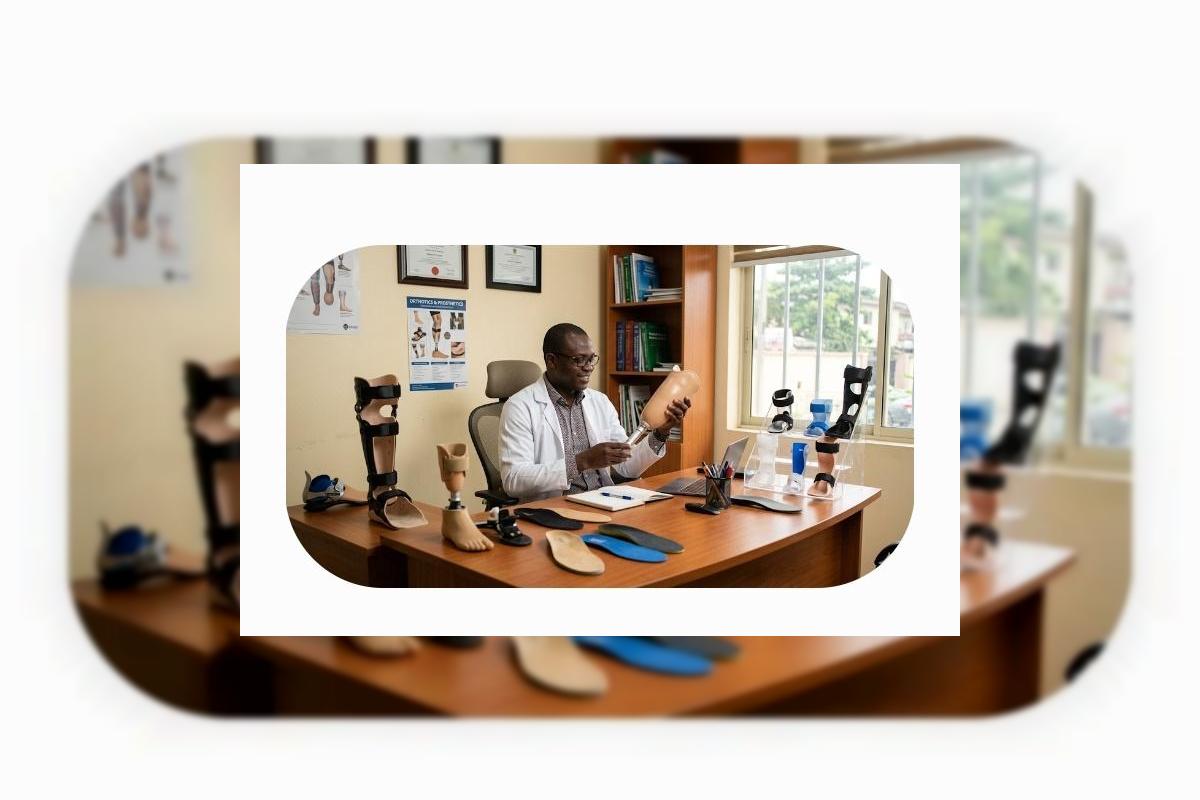

Over 27 million Nigerians carry the weight of disability every single day. Most of them have never seen a prosthetist, never held a properly fitted brace, never heard that a device could change their life. This is the story nobody is telling, until now.
Somewhere in a government hospital corridor in Kano, a fourteen years old boy sits in a broken wheelchair, not because he needs a wheelchair, but because nobody fitted him with the ankle-foot orthosis that would let him walk. His foot drop, caused by a poorly managed case of Guillain Barré syndrome, is entirely correctable. But the word orthosis has never entered the room. His mother has spent three years believing that her son will simply never walk properly again.
She is not alone. She is one of millions.
According to the World Health Organization, Nigeria has an estimated 27 million people living with one form of disability or another roughly 14% of the population. Of that number, a significant proportion have conditions that are directly addressable through prosthetic and orthotic (P&O) intervention: cerebral palsy, stroke, diabetes-related limb loss, congenital anomalies, polio residuals, trauma injuries, and spinal conditions, among many others. And yet, prosthetics and orthotics in Nigeria remains one of the most invisible, most underfunded, and most misunderstood sectors in the entire healthcare system.

This is not a story about lack of innovation. The world of prosthetics and orthotics has never been more sophisticated; carbon-fibre running blades, microprocessor-controlled knees, dynamic AFOs that respond to gait patterns, custom silicone liners, scoliosis braces fabricated with digital precision. These technologies exist. Nigerians who can afford to travel abroad access them. The rest, the overwhelming, crushing majority do not.
A System That Was Never Built
To understand why P&O services are so scarce in Nigeria, you have to understand that they were never properly integrated into the Nigerian healthcare system to begin with. For decades, rehabilitation medicine was treated as an afterthought, a ward at the back of a teaching hospital, an underfunded department staffed by one or two professionals, a service for patients who had "survived" their real medical crisis and were now somehow a lower priority.
The Medical Rehabilitation Therapists Board of Nigeria (MRTB)the statutory body responsible for regulating professionals including prosthetist, orthotists, physiotherapists, and occupational therapists has existed since 1988. Nearly four decades later, accredited P&O training programmes in Nigeria remain strikingly few. The University of Lagos and a handful of other institutions have made gains, but the production pipeline of qualified P&O practitioners has never matched the scale of need. When a country of over 220 million people has fewer than 500 registered prosthetists and orthotists, we are not dealing with a shortage. We are dealing with a structural collapse.
Federal Medical Centres and Teaching Hospitals the institutional backbone of specialist healthcare in Nigeria vary wildly in their P&O capacity. Institutions like the National Orthopaedic Hospital Igbobi in Lagos and National Orthopaedic Hospital Enugu have been landmarks in orthopaedic care for decades. But outside these flagship centres, P&O departments are often skeletal: limited equipment, restricted materials, long waiting lists, and practitioners who are stretched impossibly thin.
State owned hospitals are even more inconsistent. Some have no functioning P&O units whatsoever. In states across the North East and North West, patients who need prosthetic limbs following road traffic accidents the leading cause of amputation in Nigeria must travel hundreds of kilometres to access care, often at personal cost that rivals the price of the device itself.
The Private Sector Is Trying But Isn't Enough
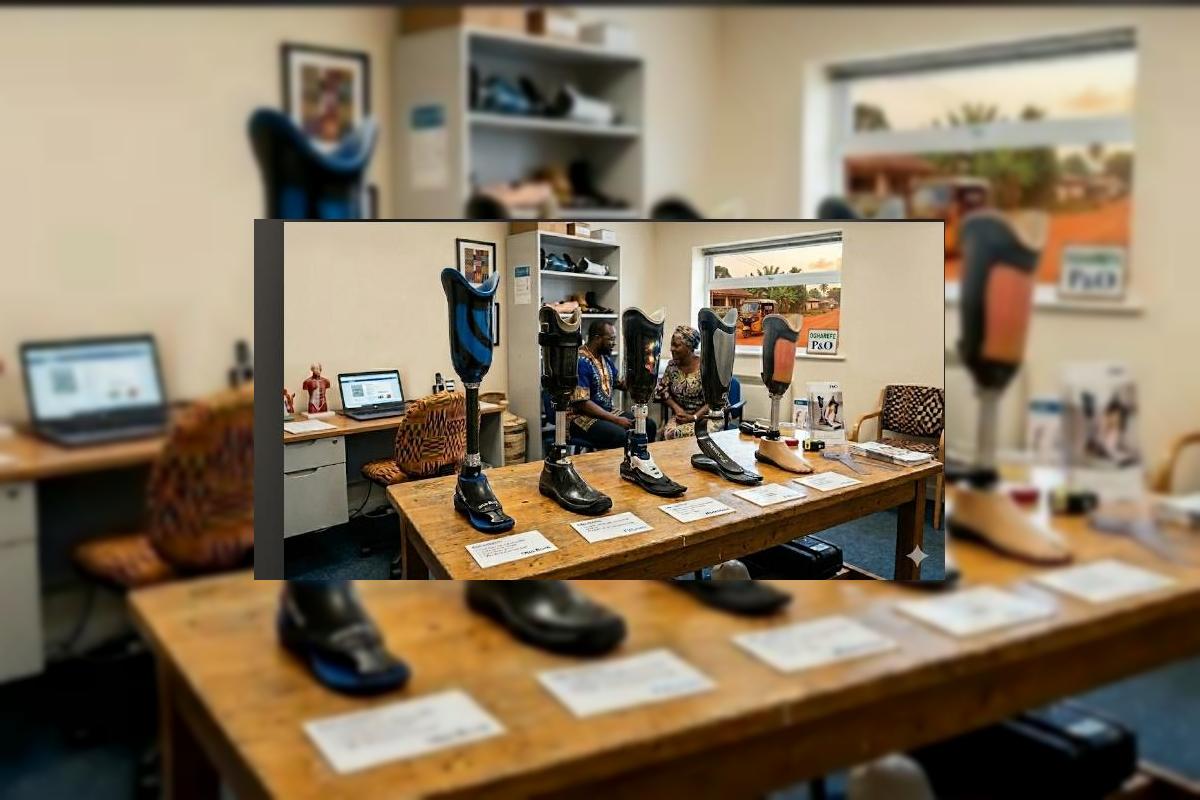
Into this gap, a modest but growing number of private P&O clinics have emerged. Clustered predominantly in Lagos, Abuja, and major South-South cities like Warri and Port Harcourt, these clinics provide a level of care that the public system frequently cannot: dedicated consultation, better material stocks, shorter waiting times, and practitioners with more bandwidth to give proper patient attention. Some are attached to orthopaedic surgeons' practices; others operate independently.
But private care in Nigeria is expensive and in P&O, the cost equation is brutal. A basic below-knee prosthesis can cost anywhere from ₦500,000 to ₦6,000,000 depending on materials and components. A custom-fabricated ankle-foot orthosis ranges from ₦60,000 to ₦250,000. For a country where the national minimum wage sits below ₦70,000 per month, these figures are not merely expensive. They are, for most patients, completely unattainable.
A basic prosthetic limb can cost more than six months of minimum wage income. For most Nigerian families, it is not a medical decision. It is an economic impossibility.
Health insurance coverage for P&O services under the National Health Insurance Authority (NHIA) formerly the NHIS remains inadequate. While the 2022 National Health Insurance Authority Act theoretically expanded the framework for coverage, implementation has lagged significantly. Most patients with amputations, cerebral palsy, or spinal deformities are still paying out of pocket. Those who cannot pay simply go without.
The Silence That Kills Slowly
There is another dimension to this crisis that statistics cannot fully capture: the deep, enduring silence around disability in Nigerian communities. Families hide children with cerebral palsy from neighbours. Adults with below knee amputations lose employment because of irrational stigma. Stroke survivors who could regain significant mobility with a properly fitted ankle orthosis are told by well meaning relatives to "just rest" and "trust God" advice that, while spiritually sincere, is medically incomplete.
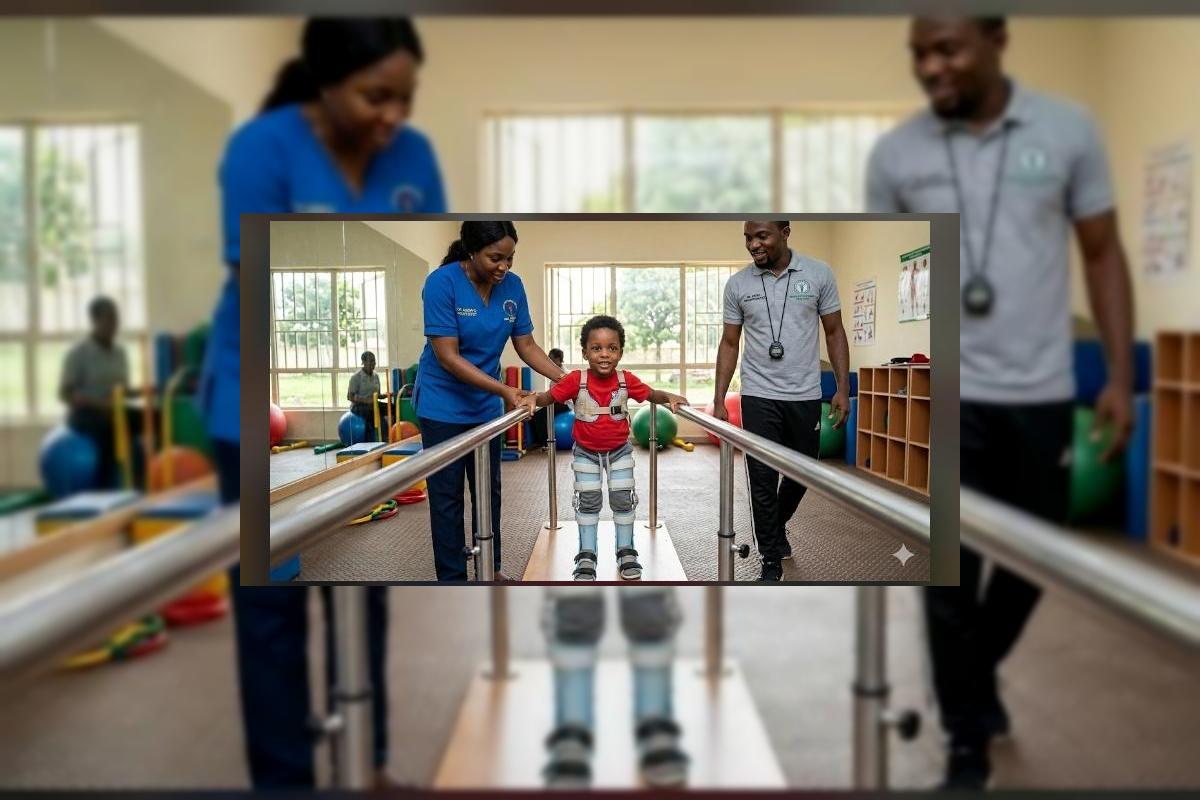
This silence is not born of cruelty. It is born of ignorance and that ignorance is, in large part, a failure of public education and health communication. Most Nigerians have never been told that a device can correct a foot deformity. That a child with clubfoot, treated early with orthotics and a structured programme, can walk normally. That a diabetic patient who loses a toe or a foot does not have to lose their independence. That stroke related foot drop is not a permanent life sentence if the right intervention happens early enough.
Ortho Narra exist because this conversation is long overdue.
What This Blog Will Do
This is the first in a series of articles that will explore, challenge, document, and ultimately attempt to transform the way Nigerians think about prosthetics, orthotics, and mobility care. We will tell patient stories real rehabilitation journeys from real communities across the country. We will examine the institutions that are doing the work, the policies that are failing it, and the practitioners who are fighting against impossible odds every day.
We will be honest about what is broken. We will be equally honest about what is working. We will cover emerging technologies and ask, plainly, how they can reach Nigerian patients who currently have no access to even the most basic devices. We will speak to parents whose children have cerebral palsy, to amputees navigating urban Lagos without prostheses, to the few dozen P&O students studying at accredited Nigerian institutions and wondering whether the system they are joining will actually serve the population that needs them.
Above all, Ortho Narra will not be comfortable. Comfort has cost this country too many years of inaction on disability care. The boy in the Kano corridor and the millions like him deserve better than comfortable silence.
That is where we begin
Comments (0)
No comments yet. Be the first!
Please login to leave a comment
Login to Comment