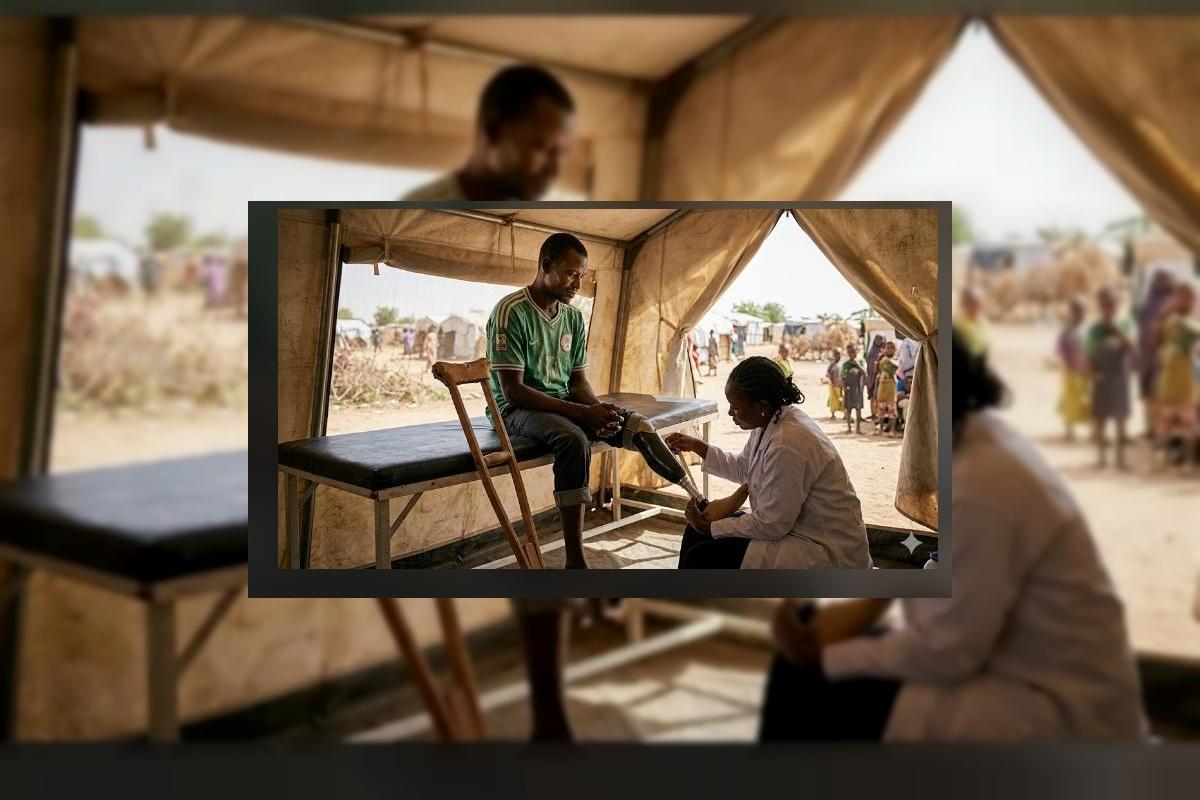

The silence surrounding blast injuries and traumatic amputation in Nigeria’s North-East is not merely a regional crisis; it is a profound failure of national rehabilitation policy. For a survivor of an improvised explosive device, the calendar is not just a measure of time, but a tally of lost mobility, delayed integration, and phantom pain that the healthcare system has largely failed to address.
"For nine years, I didn't exist to the world outside my IDP camp. I was seventeen when the bomb detonated in Maiduguri, and my world shrank to the length of my crutches. They told me to be thankful for life, but every day without a prosthetic was another day I was forced to watch my peers move forward while I stayed stagnant. I am twenty-six now, and next month, for the first time, I will be fitted for a device. I spent nearly a decade waiting for a path back to myself. — Ibrahim, Borno State"
In the landscape of prosthetic rehabilitation in Nigeria, the North-East stands as a stark, urgent exception to every standard of care. Survivors of the decade-long conflict in Borno, Yobe, and Adamawa are not just facing the physical trauma of traumatic amputation; they are navigating a post-conflict environment where medical infrastructure remains shattered. The reality of blast injuries involves far more than the loss of a limb—it is a complex, systemic injury profile that requires a multidisciplinary response rarely available in the zones where it is needed most. We are not just treating wounds; we are rehabilitating citizens who have been rendered invisible by geography and insecurity.
The Blast Injury Spectrum: Understanding the Damage
To comprehend the scale of the North-East crisis, we must recognize that a blast is not a singular event. It is a four-tiered assault on human physiology that creates the complex rehabilitation needs we see in our clinics.
| Injury Category | Clinical Impact |
|---|---|
| Primary Barotrauma | Blast wave damage to air-filled organs (lungs, ears, GI tract). |
| Secondary Fragmentation | Penetrating wounds from shrapnel and debris causing complex limb damage. |
| Tertiary Amputation | Traumatic amputation caused by wind force or structural collapse. |
| Quaternary Burns/PTSD | Thermal burns and the profound, long-term psychological scarring of conflict. |
"Nine years is nine years too many. It does not have to continue. When a seventeen-year-old survives a blast, they deserve more than just a survival story—they deserve the technological intervention required to walk into their adult life."
Ibrahim’s Journey: Nine Years on Crutches
Ibrahim’s case is the most devastating reminder of our collective inaction. For nearly a decade, his residual limb was managed with nothing more than basic wound care and temporary bandages. His physical development was arrested; his spine suffered from the chronic asymmetry of hopping on crutches, and his social development was stunted by the isolation of displacement. When he finally reached OrthoNarra, he wasn't looking for sympathy—he was looking for the functional technology that his peers in the South take for granted. His story is not unique; it is the silent reality for thousands of survivors whose traumatic amputation has never been met with a professional prosthetic fitting.
Five-Point Rehabilitation Gap Analysis
We cannot fix what we do not define. The failure to provide prosthetic care in the North-East is rooted in five structural failures that require immediate policy intervention:
1. Destroyed Infrastructure
Years of conflict have obliterated the tertiary hospitals capable of hosting advanced P&O units in the North-East.
2. Practitioner Security Constraints
It is difficult to recruit and retain high-level prosthetists in zones where the safety of both patient and practitioner is not guaranteed.
3. Limited Humanitarian Mandates
International NGOs often focus on immediate surgical trauma, but rarely have the long-term, multi-year funding required for prosthetic fabrication and gait training.
4. Absence of National Programs
Nigeria currently lacks a dedicated national conflict-disability program to centralize the care of blast-injury survivors.
5. IDP Invisibility
Internally Displaced Persons are mobile by necessity, making consistent, multi-month prosthetic follow-ups nearly impossible under current humanitarian delivery models.
The Path Forward: What Must Be Built
We must transition from "field casualty care" to "long-term prosthetic empowerment."
| The Failure | The Mandate |
|---|---|
| Reactive, one-off care. | Sustainable prosthetic networks in Maiduguri/Yola. |
| Loss of mobility in IDP camps. | Mobile fabrication labs that follow the population. |
| Ignoring secondary deformity. | Mandatory physical therapy alongside fittings. |
| Stigma of the "amputee veteran." | Public policy integration into the workforce. |
A Final Reckoning
The conflict in the North-East is evolving, but the trauma remains fixed in the bodies of thousands. We have spent years documenting the casualties; it is time we commit to the survivors. To the policymakers: An amputation is not a final state—it is a functional challenge that can be solved with the right technology and the political will to deploy it. To the medical community: We must bridge the gap between surgical survival and true physical independence. OrthoNarra continues to advocate for the forgotten, but silence is no longer an option. Nine years is nine years too many. It does not have to continue.
Comments (0)
No comments yet. Be the first!
Please login to leave a comment
Login to Comment