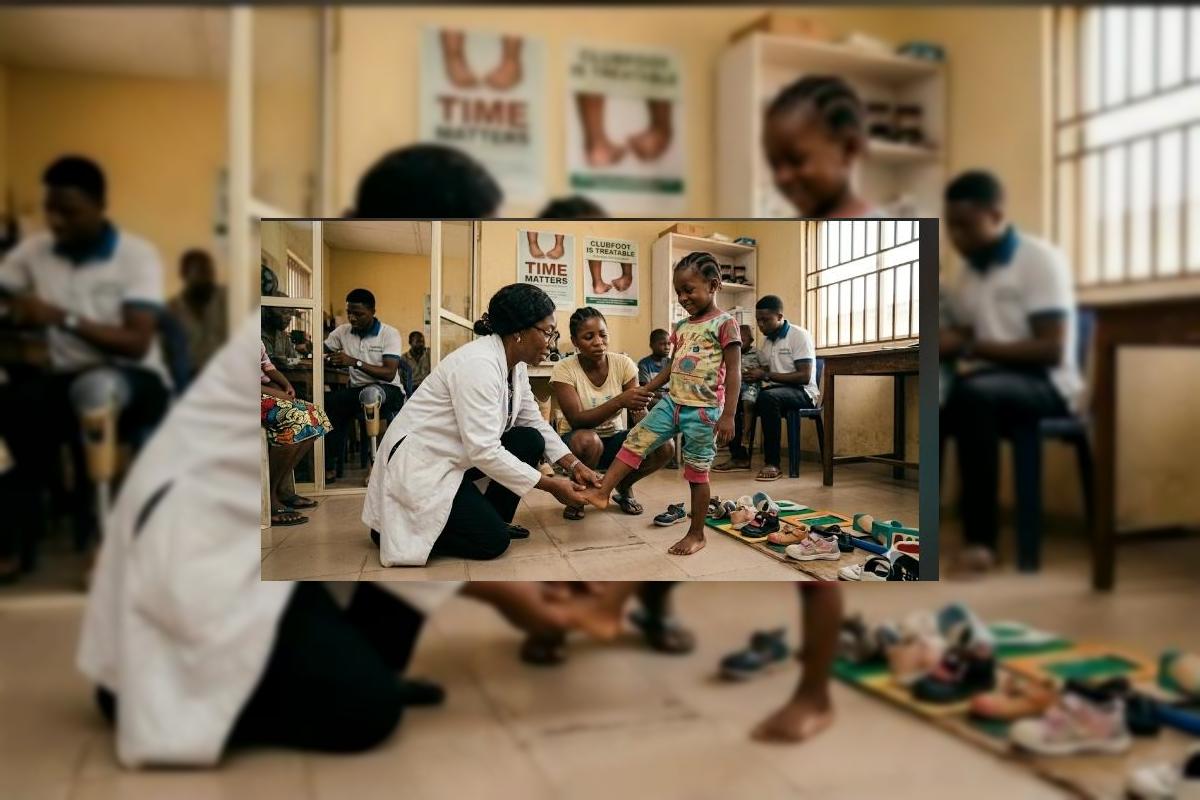

Every parent looks forward to the day their child takes their first steps. But when those steps reveal feet that seem to lack an arch, panic often sets in. In Nigeria, the "flat foot" concern is a common reason for orthopedic visits, yet it is often misunderstood as a permanent disability rather than a frequent stage of physical growth.
"My daughter is four, and whenever she walks barefoot, I notice her feet look completely flat. The neighbor told me she would grow up to have terrible back pain and won't be able to run like other children. I’ve been looking for special shoes to force an arch, but I don’t know if I’m doing the right thing. — Concerned Parent, Port Harcourt"
In pediatric orthopedics, flexible flatfoot is one of the most common presentations. For most children, the arch of the foot is not fully developed at birth and continues to form throughout early childhood. When we see a "flat" appearance, it is often simply a pad of fat or ligaments that are still developing the necessary tension to create that characteristic curve.
Distinguishing Normal Development from Clinical Needs
Parents should be empowered to distinguish between a natural developmental phase and a condition requiring intervention.
| Condition | Characteristics | Action Required |
|---|---|---|
| Flexible Flatfoot | Arch appears when standing on toes but disappears when flat-footed; usually painless. | Routine monitoring; often resolves with age. |
| Rigid Flatfoot | Arch is absent even when standing on toes; often associated with pain or stiffness. | Consultation with an orthopedic specialist for assessment. |
Why "Corrective" Shoes Are Often a Misconception
There is a persistent myth in Nigeria that rigid, high-top, or custom-molded shoes can "force" an arch to develop. In reality, for most children with flexible flat feet, these shoes do not permanently change the foot structure. Instead, allowing children to walk barefoot on varied terrain helps strengthen the intrinsic muscles of the foot, which is far more effective in supporting natural arch development.
The Roadmap to Healthy Pediatric Feet
To support healthy foot development, we recommend the following approach:
1 Active Play
Encourage activities that involve running, jumping, and balancing. This naturally engages the muscles required for arch support.
2 Observe Function, Not Appearance
Focus on whether the child is active and pain-free. If the child is playing normally and not complaining of pain, the "flat" appearance is likely a non-issue.
3 When to Seek Help
Professional assessment is necessary if the child complains of persistent pain, demonstrates a sudden change in their gait, or if the foot appears rigid and non-flexible.
A Call to Parents and Caregivers
To parents: Don't let the appearance of a flat foot cause unnecessary anxiety. Focus on your child’s comfort and activity levels. To our community: Let’s stop pushing unnecessary corrective footwear that can limit a child's natural foot development. To the professionals: Continue to educate families on the difference between normal developmental variants and conditions needing clinical care. Orthonarra remains committed to guiding parents through every step of their child’s growth.
Comments (0)
No comments yet. Be the first!
Please login to leave a comment
Login to Comment