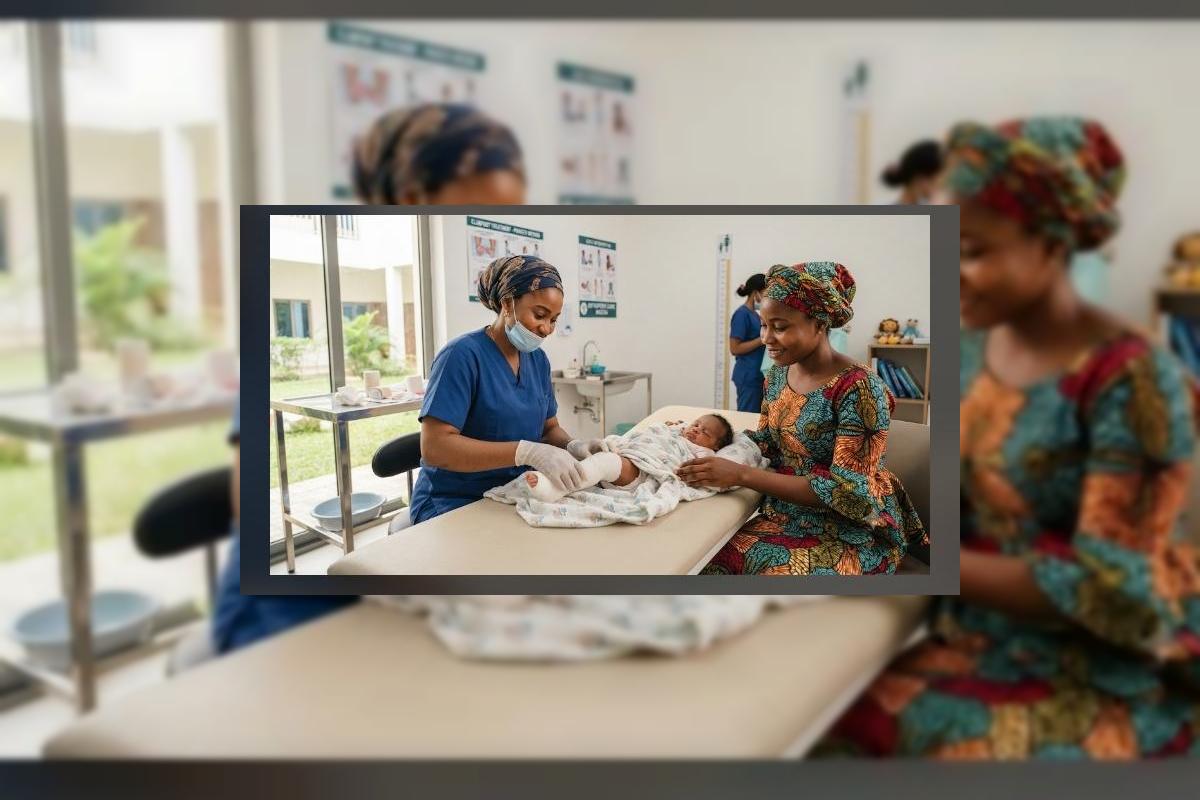

The silence surrounding congenital clubfoot management in Nigeria is a heartbreaking barrier to a child's future. For an infant born with feet twisted inward and downward, relying on unverified traditional massage, rigid strapping, or passive "wait-and-see" hopes is a tragic mistake that turns a fully treatable condition into a permanent lifetime disability.
"Assuming that a congenital clubfoot will correct itself over time or treating it with crude, non-medical manipulation is a clinical failure that robs a child of their first steps. True pediatric advocacy demands the immediate implementation of the gold-standard Ponseti method—gentle, serial casting that guides growing bones into correct alignment without invasive early surgery. — Orthonarra Public Awareness Desk"
In the landscape of pediatric orthopedic care in Nigeria, clubfoot (congenital talipes equinovarus) is one of the most common structural birth defects, affecting thousands of newborns every year. When left untreated or improperly managed with harsh traditional methods, the child grows up unable to walk flat on their feet, walking instead on the sides or tops of their ankles. This leads to severe chronic pain, social isolation, and complete dependence. The Ponseti method has revolutionized global pediatric care by offering a non-surgical, highly effective solution. By using a precise sequence of gentle manipulations, specialized plaster casting, and a minor tendon release, infant feet can be completely corrected during the first few months of life when the ligaments and bones are most pliable.
The Three Barrier Cards: Why Nigerian Children Face Avoidable Lifelong Disability
To eradicate preventable clubfoot disability across the nation, we must dismantle the three pillars of misinformation that delay expert medical treatment.
| Barrier | The Impact on the Child | The Necessary Shift |
|---|---|---|
| The Traditional Misconception | Parents resort to painful local massages and tight cloth bindings that crush delicate infant tissue and worsen the deformity. | Educating communities that clubfoot is a structural bone and ligament condition requiring expert orthopedic care. |
| The 'Wait and Grow' Myth | Families delay seeking care, thinking the child will "grow out of it," allowing the foot bones to harden in the deformed position. | Initiating Ponseti casting within the first few weeks of life when infant flexibility is at its peak. |
| Brace Non-Compliance | Stopping the maintenance boots-and-bar phase prematurely, which leads to a rapid relapse of the clubfoot deformity. | Providing rigorous family counseling and comfortable, high-quality abduction braces to ensure full compliance. |
"A clubfoot corrected in infancy means a child who runs, plays, and grows up with absolute freedom. The window of opportunity opens at birth—we must never waste it."
Clinical Profile: The Mechanics of Serial Correction
The Ponseti method is an exquisite application of biomechanics. Because an infant's collagen and soft tissues are elastic and responsive, a certified orthotist or orthopedic specialist can gently stretch the tight ligaments week by week. Every 5 to 7 days, the old cast is removed, the foot is manipulated slightly further into alignment, and a new long-leg plaster cast is applied. Once the midfoot and heel are aligned, a simple, minor outpatient procedure (an Achilles tenotomy) releases the tight heel cord. Finally, the child transitions into a custom foot-abduction brace (boots and bar) worn during sleep to lock in the correction permanently.
What Changes Everything: The Action Strip
Implementing early Ponseti clubfoot management delivers five decisive biological and societal breakthroughs:
1 Full Correction Without Major Surgery
Serial casting eliminates the need for radical, invasive, and scarring reconstructive foot surgeries.
2 Normal, Pain-Free Walking Biomechanics
Corrected feet allow children to run, jump, and participate fully in sports and childhood activities just like their peers.
3 Complete Prevention of Lifetime Disability
Early intervention stops a permanent physical handicap before it ever dictates a child's education and career path.
4 Psychological and Social Empowerment
Children grow up without the stigma of a visible deformity, building deep confidence and seamless social integration.
5 High Cost-Effectiveness
Simple casting materials and outpatient care cost a fraction of what families would spend managing a lifelong, untreated adult disability.
A Call to Action
To parents and family members: If a baby is born with a clubfoot, do not wait and do not use traditional massage—seek a certified Ponseti clinic immediately. To our medical community: Establish clubfoot screening programs in maternity wards and refer infants during their first weeks of life. To our policy makers: Integrate and subsidize Ponseti clinics across all primary and secondary healthcare centers in Nigeria. Orthonarra will continue to expose these critical clinical realities until every child born with a clubfoot takes their first steps on straight, healthy feet. A child's mobility is a sacred right, and their future starts with a cast.
Comments (0)
No comments yet. Be the first!
Please login to leave a comment
Login to Comment