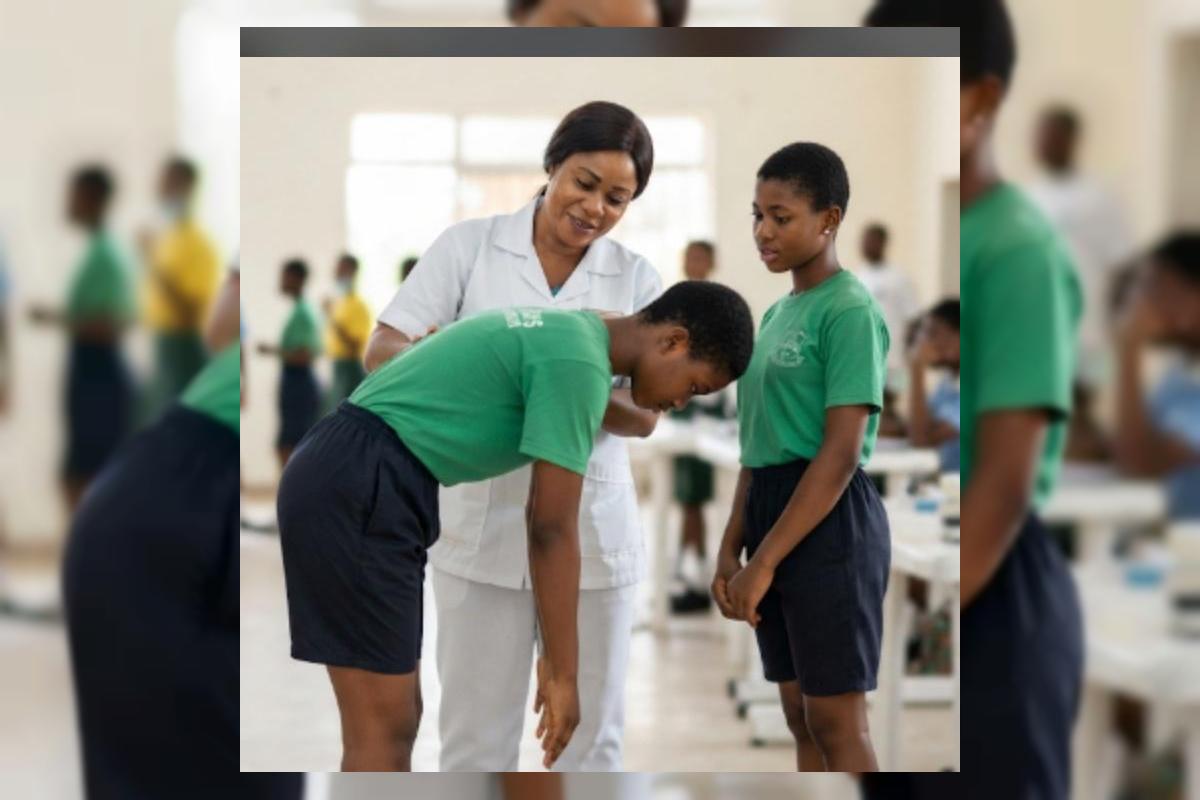

The silence surrounding adolescent spinal health in Nigerian schools is a ticking time bomb for teenage development. For a growing child, ignoring a subtle shoulder tilt or an uneven waistline while waiting for severe back pain to appear is a clinical failure that allows progressive spinal curves to advance unchecked toward major surgery.
"Treating adolescent scoliosis as something to notice only after a visible deformity shocks the family is a profound oversight. True pediatric advocacy demands routine, proactive school screening programs so we can catch spinal curves during the rapid growth spurt when non-invasive custom bracing can halt progression entirely. — Orthonarra Public Awareness Desk"
In the landscape of pediatric healthcare in Nigeria, adolescent idiopathic scoliosis (AIS) often develops silently and painlessly during early adolescence. Because the spinal curve twists and bends gradually over months, teenagers rarely complain of discomfort until the curve reaches an advanced, structurally rigid stage. Without school-based or routine clinical check-ups, parents frequently miss the early warning signs—such as uneven shoulder heights, a prominent shoulder blade, or a leaning torso. When these curvatures cross critical thresholds without intervention, they require complex, high-risk surgical fusions. Early detection through systematic screening transforms scoliosis management from a major surgical crisis into a manageable, non-invasive outpatient orthotic journey.
The Three Barrier Cards: Why Nigerian Teens Face Preventable Spinal Deformities
To professionalize adolescent spinal care across the country, we must dismantle the three structural barriers that keep scoliosis invisible until it is too late.
| Barrier | The Impact on the Teenager | The Necessary Shift |
|---|---|---|
| The Absence of School Screenings | Curves develop completely unnoticed during puberty because routine posture checks are missing from school health programs. | Integrating simple, non-invasive Adam's Forward Bend Tests into standard secondary school health evaluations. |
| Dismissing Asymmetry as 'Bad Posture' | Parents blame slouching or heavy backpacks for uneven shoulders, delaying expert orthopedic diagnosis. | Educating parents and teachers to recognize true structural spinal rotation versus simple muscular slouching. |
| Fear of Bulky Braces | Teens resist treatment due to social stigma, fearing heavy, visible medieval-style apparatuses. | Providing modern, low-profile, custom-engineered TLSO braces that fit discreetly beneath everyday clothing. |
"A spine is like a young sapling; if it begins to grow crooked, gentle guidance early on sets it straight for a lifetime. Waiting until it hardens makes correction infinitely harder."
Clinical Profile: The Biomechanics of the Forward Bend Test
The most effective tool for early detection is the simple Adam's Forward Bend Test. When a teenager bends forward at the waist with palms together, a trained screener looks across the back from behind. If scoliosis is present, the spinal rotation forces the ribs on one side to elevate, creating a visible "rib hump" or asymmetry. A certified orthotist or pediatric specialist uses this screening cue to prompt a formal scoliometer measurement and X-ray evaluation. Catching the curve before it exceeds 25 to 30 degrees allows custom thoracolumbosacral orthoses (TLSOs) to apply corrective three-point pressure, steering the spine safely back as the teenager grows.
What Changes Everything: The Action Strip
Implementing routine adolescent scoliosis screening delivers five decisive biological and societal breakthroughs:
1 Early Curve Arrest
Detecting curves early allows custom bracing to stop progression before skeletal maturity locks the deformity in place.
2 Absolute Avoidance of Spinal Fusion Surgery
Successful conservative orthotic management spares teenagers from invasive spinal rod insertions and permanent joint fusion.
3 Preservation of Core Flexibility
Non-surgical treatment maintains the natural range of motion and flexibility of the spine throughout adult life.
4 Protection of Adolescent Self-Confidence
Preventing severe rib humps and posture distortion safeguards teenagers against body-image trauma during vulnerable developmental years.
5 Drastic Reduction in Long-Term Medical Costs
Early screening and outpatient custom bracing cost a fraction of the heavy financial and emotional toll of major spinal surgeries.
A Call to Action
To parents and school administrators: Look closely at your children's posture, check for uneven shoulder blades, and request routine spinal screenings. To our healthcare community: Advocate for adolescent orthopedic checks in every primary care setting. To our policy makers: Mandate basic posture and scoliosis screening across all Nigerian secondary schools. Orthonarra will continue to expose these critical clinical realities until proactive adolescent spinal care is standard nationwide. A straight spine builds a strong future—let us catch scoliosis before it grows.
Comments (0)
No comments yet. Be the first!
Please login to leave a comment
Login to Comment