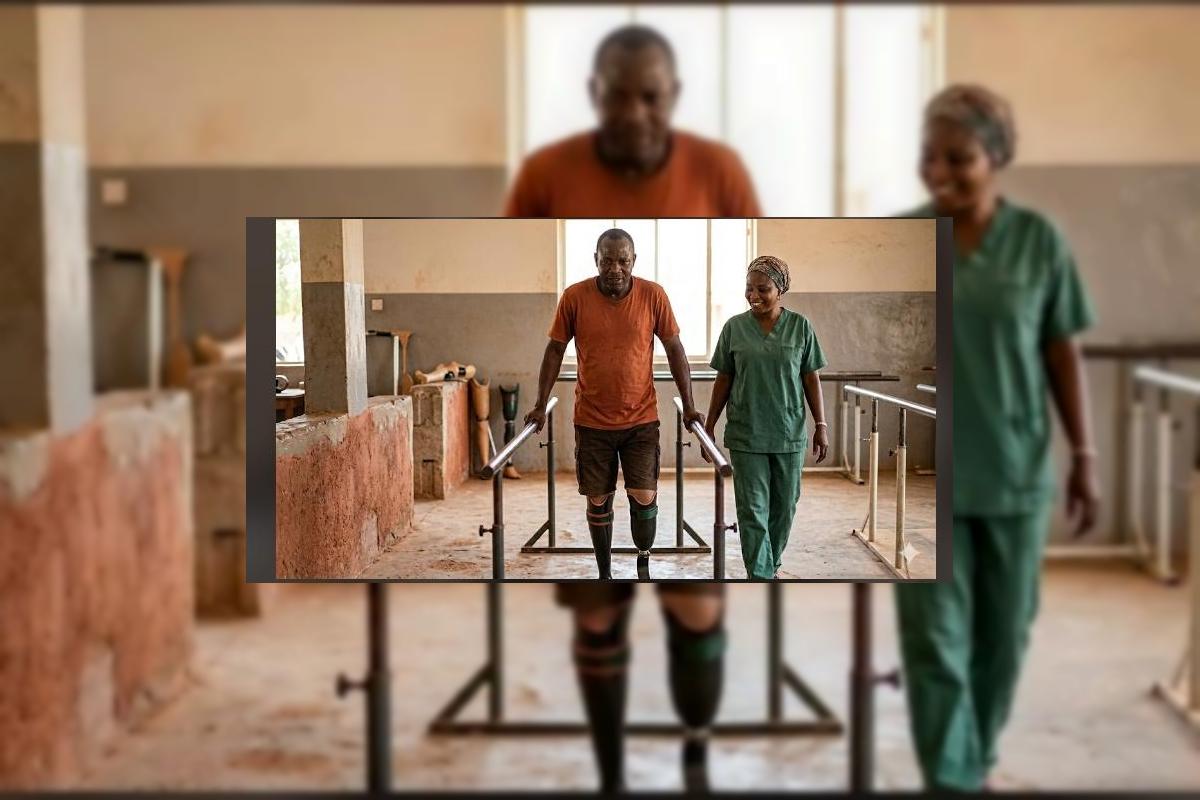

The aftermath of an accident on the Kano-Kaduna highway is not merely measured in vehicle wreckage; it is measured in the profound biological and psychological reconfiguration of a human life. For a motorcyclist facing bilateral lower-limb loss, the road back to mobility is an uphill battle against time, gravity, and systemic medical neglect.
"When the truck hit me near the KD 47 km post, I thought my life ended on that hot asphalt. In the hospital, people looked at my empty trousers and talked about me like a corpse that forgot to stop breathing. But the prosthetist was different. He was the first person who spoke to me not as a patient but as a man who was going to walk again. He looked at my residual limbs and saw a foundation, not a tragedy. — Ibrahim, Kaduna"
In the landscape of prosthetic rehabilitation in Nigeria, we find ourselves confronting a severe crisis regarding bilateral transtibial amputation care. Surviving a motorcycle crash on major northern transport arteries often plunges patients into a specialized medical vacuum. While public health messaging extensively covers accident prevention, it remains completely silent on what follows survivable trauma. A motorcycle accident Kano-Kaduna road survivor who loses both limbs faces an entirely different anatomical reality than a unilateral amputee. This is not a double challenge; it is a categorical paradigm shift. When an institutional 8-month gap with no referral occurs post-surgery, we aren't just delaying physical rehabilitation—we are allowing severe muscle contractures and muscle wasting to compromise the patient's long-term potential for community ambulation.
The Three Critical Milestones: Navigating the Recovery Timeline
To successfully rewrite the narrative for survivors like Ibrahim, we must closely track the definitive physiological markers that dictate recovery. These metrics represent the grueling, non-linear journey from trauma to independent movement.
| Recovery Metric | The Clinical Reality | The Rehabilitative Milestone |
|---|---|---|
| 2 Limbs Lost | Total loss of anatomical ankle proprioception and shock absorption. | Bilateral transtibial stabilization and surgical healing. |
| 18 Months | Overcoming a prolonged referral gap to achieve initial standing balance. | First independent steps using specialized short devices. |
| 3 Years | Rebuilding systemic cardiovascular endurance and gait mechanics. | True community walking across rugged, unpaved terrain. |
"Losing both legs changes the metabolic cost of walking entirely. Without a natural knee-ankle axis on either side, the body requires immense energy to move forward. Success hinges completely on highly structured prosthetic alignment and relentless conditioning."
Ibrahim’s Journey: The Reality of Double Limb Loss
Ibrahim was a commercial motorcyclist navigating the high-speed transit corridor between Kano and Kaduna. A devastating collision resulted in immediate, emergency bilateral transtibial amputation. Following his discharge, he spent eight agonizing months at home with zero information on prosthetic options, watching his residual limbs weaken. This delay is catastrophic for bilateral alignment; without early intervention, hip and knee joints stiffen permanently. Ibrahim's rehabilitation finally began with intensive preprosthetic conditioning to toughen his residual limbs and strengthen his core. He was then introduced to the critical "stubbies phase," utilizing shortened prostheses without prosthetic ankles to lower his center of gravity. This vital phase allowed him to master balance without the terrifying risk of high-impact falls, laying the groundwork for his eventual transition to full-length prostheses.
The Six-Stage Journey Timeline: From Highway Trauma to Autonomy
Rehabilitation for a bilateral lower-limb amputee requires a highly disciplined, multi-phase clinical progression. Skipping any part of this dark asphalt path leads directly to device rejection and long-term wheelchair dependency:
1 The Referral Gap (Month 0 to 8)
The dangerous period immediately following surgical healing where patients remain isolated at home due to a fragmented medical system, fighting depression and muscle atrophy.
2 Preprosthetic Conditioning
A rigorous phase focused on residual limb shaping via compression wrapping, soft tissue desensitization, and aggressive upper-body and core strengthening exercises.
3 The "Stubbies Phase"
The introduction of custom, shortened training prostheses. By keeping the patient close to the ground, this phase safely builds essential core stability and trust in the sockets.
4 Full-Length Prostheses
The gradual, measured elevation to full anatomical height. This stage requires expert prosthetic alignment to balance weight distribution evenly across both limbs.
5 First Independent Steps
The triumphant milestone of walking within parallel bars, transitioning to crutches, and finally taking unsupported steps within the safe confines of the clinic clinic environment.
6 Community Ambulation
The ultimate goal: reintegration into society. The amputee successfully navigates uneven roads, markets, and workplaces, reclaiming complete financial and personal independence.
Understanding the Categorical Shift: Unilateral vs. Bilateral Complexity
The aesthetic framework of Series 12—utilizing deep burnt orange, red earth, and road dark tones—reflects the rugged physical realities of northern Nigerian infrastructure. It underscores a vital truth: managing double limb loss requires a complete overhaul of traditional rehabilitation strategies.
| Unilateral Amputation (One Leg) | Bilateral Amputation (Both Legs) |
|---|---|
| The sound leg provides a constant balance reference point. | Complete loss of biological balance feedback from the ground. |
| Marginal increase in metabolic energy cost during walking. | Massive, exhausting energy expenditure required for every step. |
| Prosthetic alignment matches the sound limb's height. | Alignment must establish an entirely new center of gravity. |
| Rapid, straightforward progression straight to full-height walking. | Mandatory "stubbies phase" to prevent dangerous falls. |
We must look beyond simple survival metrics. Every single month an amputee spends bedridden due to systemic neglect permanently locks down their hip joints and alters their spinal alignment. Our healthcare system continues to fail these highway survivors by treating prosthetic care as an optional luxury. Comprehensive prosthetic rehabilitation in Nigeria must be deeply integrated into emergency trauma protocols. We are not merely delivering assistive technology; we are restoring the fundamental human right of self-determination.
A Call to Action for Transit Healthcare
To the survivors and their families: Double limb loss is a profound transition, not an end to your utility; commit to the training, embrace the stubbies phase, and reclaim your space in the world. To the orthopedic surgeons: Your job does not conclude when the wound heals; bridge the referral gap immediately by connecting patients to prosthetists. To the transport policymakers: Establishing dedicated, subsidized prosthetic care centers along major transit corridors is an economic necessity that prevents lifelong dependency. The red earth and dark asphalt remind us of where we stumbled, but they also form the very ground upon which we will stand tall again. OrthoNarra will continue to champion these complex recovery narratives until every highway survivor across Nigeria can walk away from the trauma of the road and step boldly into a functional future. Autonomy is not a privilege; it belongs to everyone.
Comments (0)
No comments yet. Be the first!
Please login to leave a comment
Login to Comment