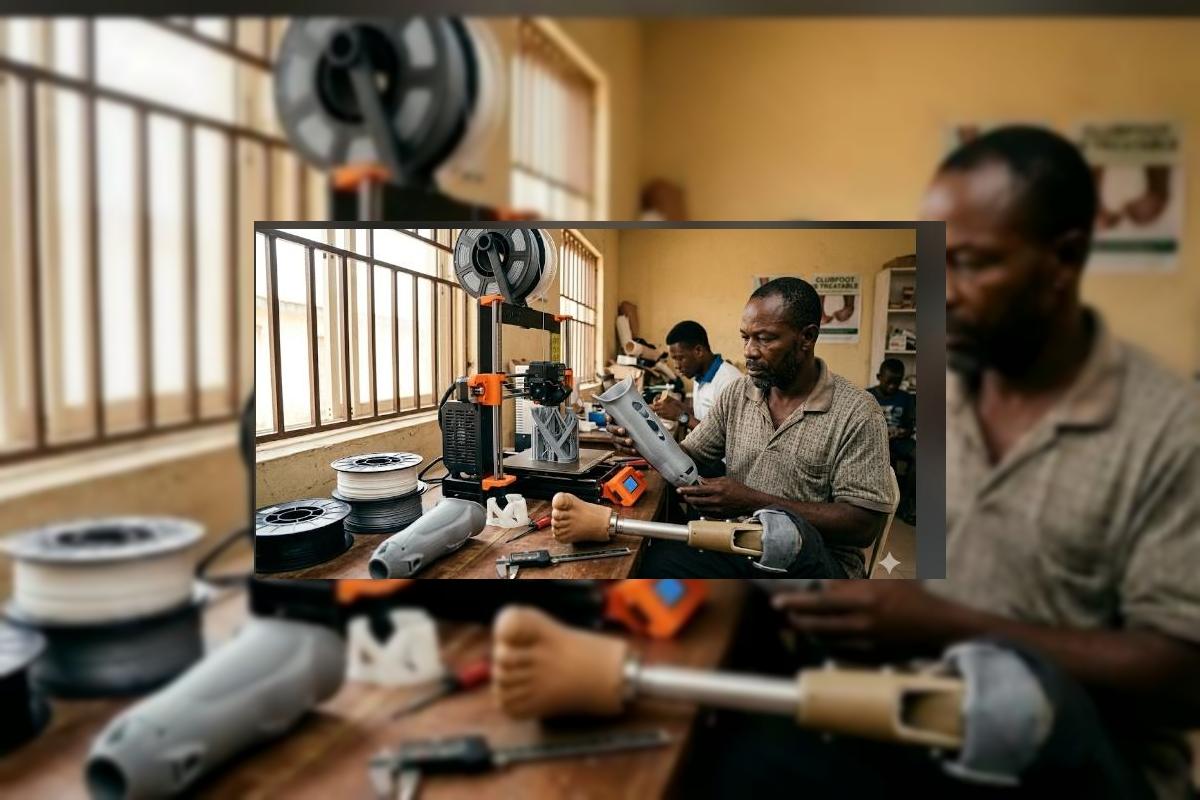

The future of mobility in Nigeria is not found in expensive, imported containers, but in the hum of a local 3D printer. For too long, the 'supply chain' for prosthetics has been a one-way street of high costs and long waits, leaving thousands of Nigerians sidelined. Innovation is finally bringing that power home.
"Before, I waited months for a limb that didn't even fit well. Now, the team takes a scan, designs the model on a computer, and I have a functional, custom-fitted limb in days. It’s not just a piece of plastic; it’s my independence being printed right here in Yola." — Amputee and Tailor, Yola
In the landscape of Nigerian prosthetics, we are witnessing a technological leap that is bypassing the broken systems of the past. Traditional manufacturing, with its reliance on centralized facilities and months of lead time, has failed to keep up with the demand for affordable care. 3D printing—or additive manufacturing—is transforming this dynamic by shifting production from global warehouses to local labs.
The Shift: From Import Dependency to Local Precision
The core advantage of 3D printing lies in its ability to democratize production. By utilizing digital blueprints and on-demand fabrication, we are solving three critical hurdles that have long plagued Nigerian patients.
| Challenge | Traditional Impact | The 3D Printing Solution |
|---|---|---|
| Long Lead Times | Weeks or months for shipping and fitting. | On-demand printing reduces wait times by up to 75%. |
| High Costs | Expensive imports are unaffordable for most. | Lower material costs and minimized waste. |
| Customization | Standard sizes rarely fit the individual. | Digital scans allow for perfect anatomical fits. |
"We aren't just printing limbs; we are printing opportunity. With robotics and sensor integration, these devices are becoming as intuitive as the limbs they replace."
Navigating the Reality of Local Innovation
While 3D printing is a game-changer, the path to widespread adoption in Nigeria faces real-world hurdles. Infrastructure, such as unreliable electricity and the need for specialized technical expertise, remains a challenge. However, this "infancy" of the sector is also our greatest asset: we are building from the ground up, free from the constraints of legacy systems.
The Roadmap: Scaling Innovation
To make this technology a national standard, we must focus on three core pillars:
1 Infrastructure & Training
We must embed additive manufacturing into academic and vocational curricula, ensuring a workforce that can design, repair, and innovate.
2 Sustainable Supply Chains
Pioneering pilot programs that convert recycled plastics and electronic waste into printing filament will reduce import dependency.
3 Strategic Integration
Government and private sector partnerships are essential to scale equipped labs in major cities, moving from isolated start-ups to a network of care.
The 3D revolution in Nigeria is proof that we don't need to be passive consumers of global technology; we can be creators of our own recovery. Every limb printed locally is a statement of our national resilience and technical capability.
A Call to the Nation
To the innovators: The tools are here; let us refine them for the Nigerian environment. To the policymakers: Invest in the labs, the talent, and the power infrastructure required to make this our new industrial reality. To the citizens: The future of medicine is digital, fast, and local. Orthonarra will continue to champion the shift from "waiting for imports" to "printing our own independence." The revolution is additive.
Comments (0)
No comments yet. Be the first!
Please login to leave a comment
Login to Comment