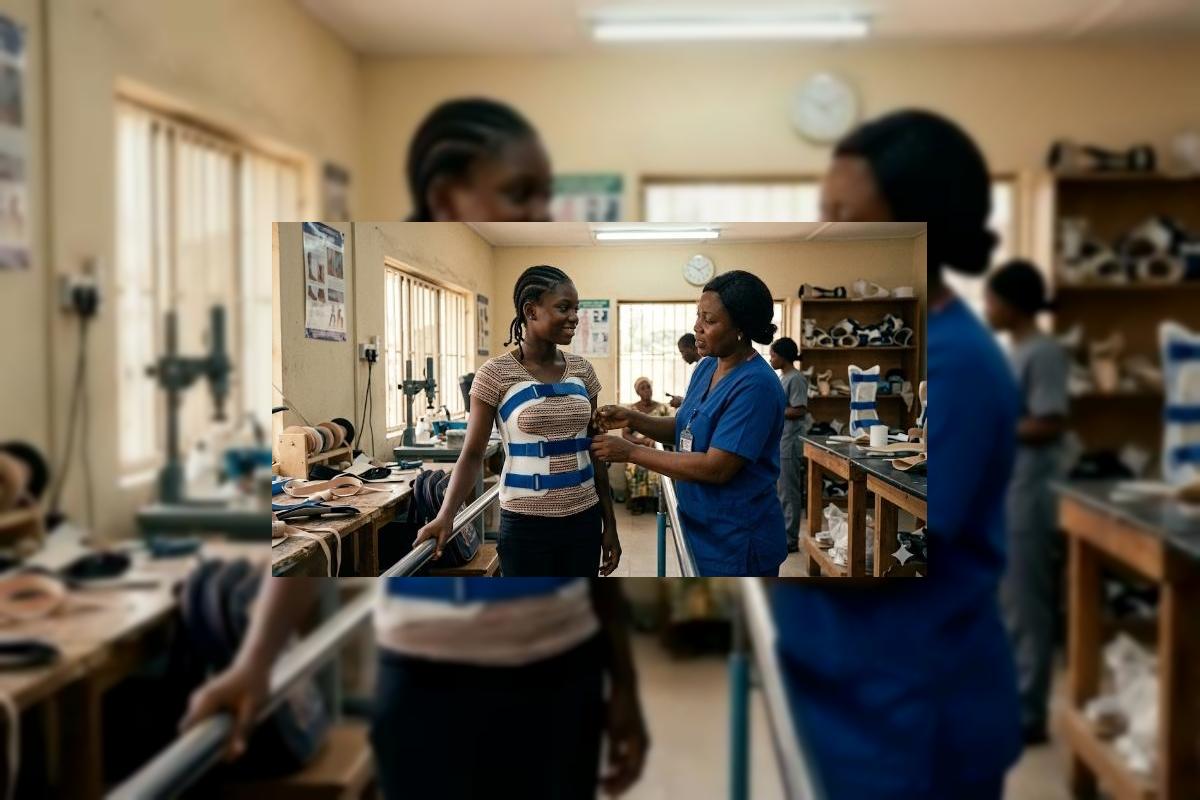

Scoliosis in Nigeria is one of the most common yet overlooked spine conditions affecting children during growth years. A well-fitted scoliosis orthosis can halt curve progression, improve posture, and restore confidence. Most parents keep missing the early signs until the condition advances significantly.
"My daughter’s shoulder looked a bit higher but I thought it was normal growth or poor posture from carrying heavy school bags. By the time we noticed the curve, it had reached 32 degrees. No one at our local clinic mentioned bracing until it was almost too late." Mother of a scoliosis patient, 13 years old · Port Harcourt, Rivers State
Scoliosis affects thousands of Nigerian children and adolescents every year, with many cases progressing undetected due to low awareness and limited school screenings. Global estimates suggest 2-3% of school-aged children develop some form of scoliosis, and similar trends are observed across Nigeria from Port Harcourt in Rivers State to Lagos, Abuja, and rural communities. This spine condition causes abnormal sideways curvature of the spine that can lead to pain, breathing difficulties, postural imbalance, and emotional distress if left untreated. The effective orthotic solution is custom scoliosis orthosis. The gap between early detection and timely bracing in Nigerian homes, schools, and hospitals remains enormous. Orthonarra is dedicated to raising scoliosis awareness in Nigeria and educating families on the critical importance of orthosis within the orthotics and prosthetics field.
What Scoliosis Actually Is
Scoliosis is an abnormal lateral curvature of the spine, often forming an “S” or “C” shape accompanied by vertebral rotation. It most commonly develops during rapid growth spurts in adolescents aged 10-18, known as adolescent idiopathic scoliosis. Other types include congenital scoliosis (present at birth due to spinal malformations) and neuromuscular scoliosis (linked to conditions such as cerebral palsy or post-polio effects). As the curve progresses, it creates visible asymmetry in shoulders, waist, or hips, and can rotate the rib cage. In Nigeria’s context — where routine spinal screenings in schools are rare, healthcare access varies greatly between urban and rural areas, and some families attribute physical deformities to spiritual causes or “normal growth from school bags” — early subtle signs are frequently dismissed. This delay allows curves to worsen beyond 25-40 degrees, increasing risks of chronic back pain, reduced lung capacity, heart strain in severe cases, and the eventual need for complex spinal surgery. Parents in Nigeria must understand that scoliosis is not just a cosmetic issue but a medical condition that benefits greatly from early orthotic intervention.
"The shoulders tilt. One hip rises higher. The back forms a progressive curve. A correctly fitted scoliosis orthosis guides the growing spine, often preventing surgery and restoring natural alignment and self-confidence."
The Scoliosis Orthosis: Simple, Effective, Underutilized
A scoliosis orthosis, commonly referred to as a scoliosis brace, is a custom-moulded device fabricated from lightweight thermoplastic materials by trained orthotists and professionals in the orthotics and prosthetics field. It applies targeted corrective pressure to slow or stop curve progression while the child is still growing. Modern designs such as the Cheneau-style brace are individually tailored to the patient’s body shape and Nigeria’s warm, humid climate for maximum comfort and daily compliance. Typically worn 16-23 hours per day, the orthosis does not cure the underlying condition but provides essential mechanical support to encourage proper spinal alignment during critical growth phases. This makes it one of the most important non-surgical interventions available for scoliosis treatment in Nigeria, helping many families avoid invasive procedures and their associated risks and costs. Orthosis plays a vital role in conservative management, especially when introduced before the curve exceeds 40 degrees.
Without Orthosis
Unchecked curve progression leads to increasing visible deformity, persistent back pain, uneven posture, breathing challenges, diminished self-esteem, and a higher likelihood of needing spinal fusion surgery later. Children often withdraw from sports, dancing, school activities, and social interactions due to body image concerns, resulting in isolation, reduced quality of life, and long-term physical limitations. In many Nigerian families, this leads to unnecessary emotional and financial burden.
With Correctly Fitted Orthosis
Timely bracing can halt or even reduce curve progression, restore better body symmetry and posture, provide significant pain relief, improve breathing function, rebuild confidence, and enable children to maintain an active school and social life. Many young patients successfully avoid surgery entirely when intervention with scoliosis orthosis begins early and compliance is maintained alongside targeted scoliosis-specific exercises (PSSE).
Clinical evidence from international studies strongly supports the use of scoliosis orthosis for moderate curves measuring 20-40 degrees, demonstrating success rates of 70-80% in preventing further worsening when worn consistently as prescribed. It is recognized as a standard of care in global guidelines, yet in Nigeria this life-changing option remains largely under-discussed and under-accessed. Greater integration of orthotists into pediatric care pathways at teaching hospitals and specialist centres is urgently needed to close this awareness gap.
Success Story: Ada’s Journey with Scoliosis Orthosis in Nigeria
Thirteen-year-old Ada from Port Harcourt was diagnosed with a 32-degree thoracic curve in early 2025. Her mother had initially dismissed the uneven shoulders as posture issues from schoolwork and phone use. After a proper assessment by an orthotist, Ada received a custom Cheneau-style scoliosis orthosis. She wore the brace diligently for 18 months while participating in scoliosis-specific physiotherapy exercises. The results were remarkable: her spinal curve reduced from 32° to 18°, shoulders and waist became symmetrical, back pain disappeared completely, and she regained full confidence to resume dancing and school sports. Ada’s inspiring story highlights the transformative power of early orthotic intervention and consistent use in managing scoliosis in Nigeria. Today, her mother advocates for better scoliosis awareness so other families do not face the same late diagnosis.
What Nigerian Parents Must Do Now
1 Recognize the early warning signs
Regularly check for uneven shoulders, waist asymmetry, one prominent shoulder blade, or leaning to one side when standing. Perform the simple Adam’s Forward Bend Test at home: ask your child to bend forward with arms dangling — any rib hump or imbalance requires prompt professional evaluation. Early detection is key to successful orthosis treatment.
2 Seek specialist orthotic assessment
Do not rely solely on general practitioners. Request a referral to a qualified orthotist or P&O unit for detailed evaluation and custom scoliosis orthosis fabrication. Early bracing during growth years delivers the best outcomes in scoliosis management across Nigeria.
3 Avoid generic or off-the-shelf braces
Pharmacy or market braces are rarely suitable and can cause skin irritation, pressure sores, or ineffective correction. Custom-fitted orthosis by trained professionals ensures safety, comfort, and real clinical benefits in the orthotics and prosthetics field.
4 Commit to consistent use and follow-up
Success relies on wearing the orthosis as recommended, combined with appropriate exercises, and attending regular monitoring visits for adjustments as the child grows. Starting intervention early maximizes benefits during peak growth periods and supports long-term spinal health.
Scoliosis management in Nigeria requires stronger public awareness, better school screening programs, and truly multidisciplinary collaboration between pediatricians, physiotherapists, and orthotists. Parents, teachers, and communities across the country hold the key to early detection. By acting promptly with orthosis when needed, families can prevent advanced complications and support healthier futures for their children in cities like Port Harcourt and beyond.
For Families Facing Scoliosis in Nigeria
If your child shows any signs of uneven posture or you suspect scoliosis, do not wait. Contact a qualified orthotist or P&O unit at your nearest teaching hospital, Federal Medical Centre, or specialist facility. A custom scoliosis orthosis could straighten their path, prevent surgery, and restore their confidence. Orthonarra is here to educate and support families on scoliosis in Nigeria, the importance of orthosis, and advancements in the orthotics and prosthetics field. Early action today prevents bigger challenges tomorrow. Knowledge and timely intervention are the foundation of successful outcomes.
Comments (0)
No comments yet. Be the first!
Please login to leave a comment
Login to Comment