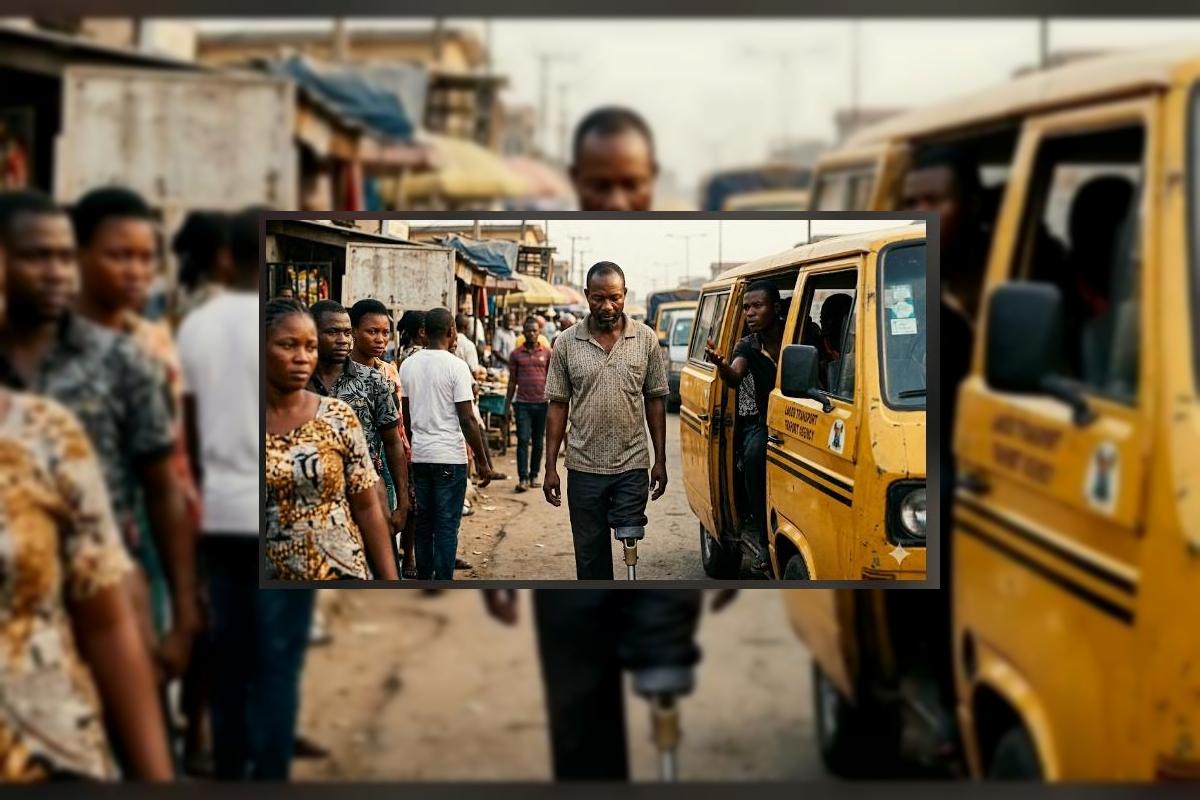

The physical limitations of disability in Nigeria are often secondary to the paralyzing 'shackle of the mind' forged by social stigma, cultural bias, and systemic exclusion. For millions of Nigerians moving with assistive devices, the cruelest barriers are not infrastructural; they are attitudinal.
"When I first got my 'strong leg,' I was flying. Then I tried to enter a Danfo at Oshodi. The conductor shouted, 'Oga, no space for your 'caliper' leg! Pity people are waiting!' It wasn't my residual limb that hurt that day; it was the sting of public pity mixed with rejection. In Nigeria, we are not seen as capable citizens with different tools; we are seen either as objects of charity to be pitied or obstacles to be avoided. The stigma cuts deeper than any surgical knife. — Amputee and Advocate, Lagos"
In the socio-cultural landscape of disability in Nigeria, we navigate a devastating irony: the very devices designed for liberation—the wheelchairs, braces, and prosthetic limbs—often serve to increase social isolation. Nigerian amputees and brace-wearers are frequently trapped by a culture that conflates physical difference with spiritual failure or ancestral curses. Stigma is not a passive feeling; it is an active economic and physical force. When societal bias labels users of assistive technology as dependents, it slams the door on workplace inclusion, converts public transport into a humiliating ordeal, and makes 'accessibility' an unimaginable luxury. This cultural shackle forces individuals into hidden lives of quiet desperation, proving that the mind's perception is the most restrictive environment of all.
The Shackle Triad: Three Cultural Walls of Exclusion
To properly dismantle disability stigma Nigeria, we must identify the discrete cultural assumptions that enforce dependency. These are the powerful attitudinal cards routinely played against individuals moving with technology.
| Cultural Bias | The Socio-Economic Impact | The Attitudinal Shift |
|---|---|---|
| The Charity/Pity Lens | Being viewed only as objects of 'help,' destroying agency and economic opportunity. | Evolving from passive pity to active empowerment and workplace inclusion. |
| Spiritual/Moral Failure | The belief that a disability is a punishment for sin or a 'curse,' enforcing deep social isolation. | Demystifying mobility differences as neutral physical realities that require tools. |
| Aesthetic Deformity | The cultural obsession with external perfection that labels assistive tech as ugly or 'lesser.' | Celebrating engineering as beautiful functionality; shifting the visual narrative. |
"A prosthesis is beautiful engineering. A wheelchair is mechanical freedom. What is ugly and deformed is the cultural mind that sees these tools as signs of dependency rather than symbols of resilience and capability."
Invisible in Oshodi: The Everyday Battle for Transportation
Consider the simple act of commuting in a major city. For a user of prosthetic devices in Nigeria or a person requiring a brace, accessing a standard *danfo* (commercial bus) is a high-stakes humiliation. Drivers frequently refuse stops, fearing that the accessible transit needs will 'delay' their trip. Conductors may use derogatory language. Fellow passengers may stare with a mixture of horror and pity. There are no ramps, no designated spaces, and zero public accommodation. This daily structural denial of simple movement makes employment inclusion almost impossible, reinforcing the stereotype that disabled individuals must remain dependent or work only 'within' specific marginalized spheres.
Reclaiming Identity: Five Shifts from Exclusion to Agency
Confronting disability in Nigeria means generating five deliberate psychological and systemic outcomes that return authority to the individual. This is how we break the attitudinal shackle:
1 Workplace & Economic Inclusion
Shifting corporate perception from charity hiring to skill-based assessment. Recognizing that a person with a device can perform; the only barrier is the attitudinal environment.
2 The Engineering Narrative
Moving public discourse away from 'medical correction' toward 'functional engineering.' Devices are specialized tools for task optimization, not evidence of brokenness.
3 Public Visibility & Accommodation
Aggressive accessible transit and public space reforms that enforce participation rather than integration by permission. Demand for structural inclusion.
4 Language Transformation
consciously rejecting terms that emphasize helplessness and adopting language focused on technology, functionality, and capability.
5 Social Participation as Rights
Understanding that inclusion in markets, churches, festivals, and leisure is not a polite gift but a fundamental human right.
The Internalized Stigma vs. Structural Agency
Our sequence from Series 10 commits to deep forest green and terracotta, visually moving away from the cold indifference of neglect towards growth. The terracotta represents our earth, our resilience, and our capacity to stand firm. True advocacy for users of assistive technology in Nigeria must move beyond generic pity towards enforcing rights. A society that refuses to integrate its physical differences is a deformed society.
| Internalized Stigma (The Old Mindset) | Structural Agency (The New Approach) |
|---|---|
| "They see me as a curse; I must hide." | "This device optimizes my function; I will occupy space." |
| Workplace 'inclusion' is a charity handout. | I demand reasonable accommodation to perform my job. |
| Public transport is a daily humiliation. | Transit systems must reform to support all mobilities. |
| Accepting passive help while suppressing shame. | Operating with tools that enforce independence. |
The time for passive acceptance has ended. Every barrier in Nigeria, whether architectural or attitudinal, is a shackle that keeps the country moving backwards. We are losing a massive reserve of national capability to the self-imposed deformity of our own biases. Disability advocacy must move from the periphery of moral obligation to the center of active national policy. We are not just fighting for 'rights'; we are fighting for the cognitive liberation that allows all mobilities in Nigeria to be seen as valid pathways to the future.
A Call to the Nation
To the individuals: Your capacity is whole, and your technology is your strength; occupy space and refuse the script of shame. To the society: Stare if you must, but stare at the resilience, not the pity; understand that tools normalize, they do not diminish. To the policymakers: Enforcing accessibility is not a drain on resources; it is a hedge against internalized stigma and economic loss. The terracotta represents our resilience. Orthonarra will continue to expose these attitudinal traps until every citizen in Nigeria understands that true deformity lies not in the limb, but in the cultural shackle of exclusion. Cognitive freedom is a national imperative.
Comments (0)
No comments yet. Be the first!
Please login to leave a comment
Login to Comment