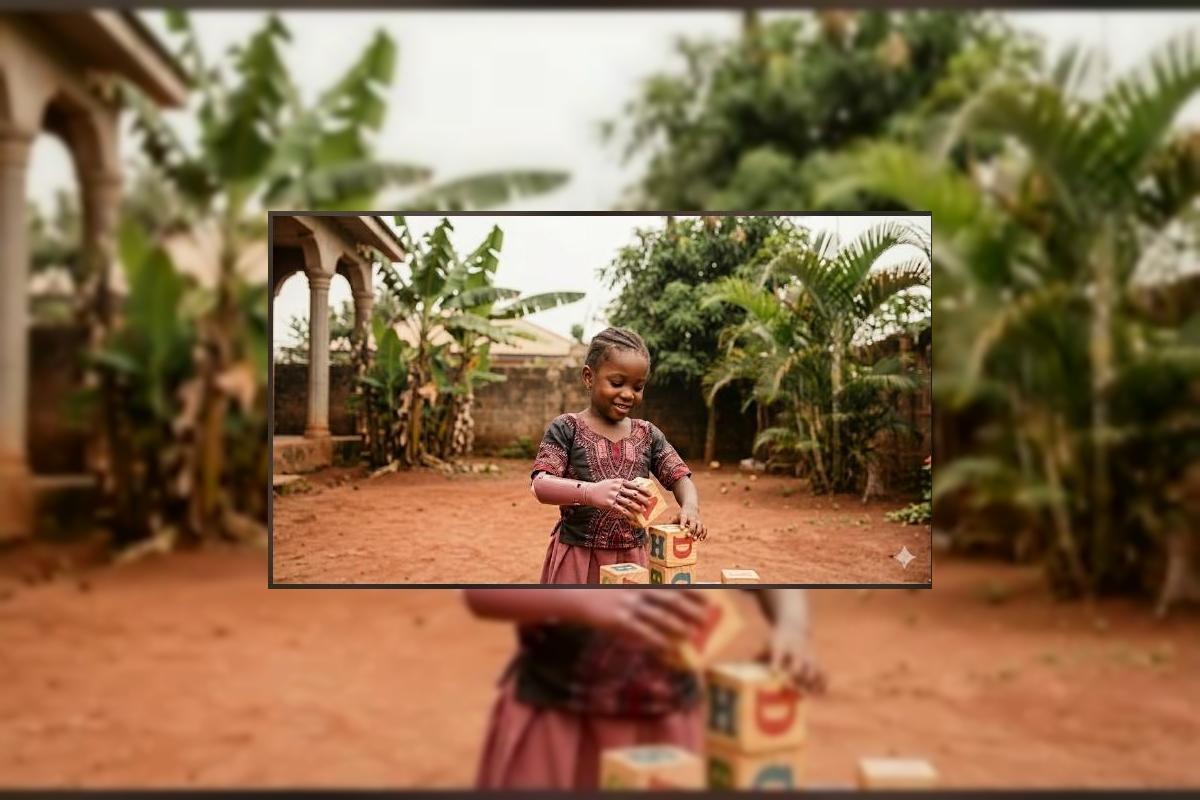

The silence surrounding congenital upper limb deficiency in Nigeria is not merely a social oversight; it is a neurological and developmental tragedy. For a child born with a limb difference, the calendar is the most formidable adversary.
"In my neighborhood in Enugu, they told me it was a curse from my ancestors. For three years, my daughter Nkechi instinctively used her stump because nobody told us a prosthesis even existed. I spent three years mourning a limitation. I should have spent them building a capability. — Mother of Nkechi, Enugu"
In the landscape of paediatric prosthetics in Nigeria, we find ourselves at a crossroads between ancient stigmas and modern neurobiology. Children with limb differences are often hidden away, victims of a culture that frequently interprets congenital hand difference Nigeria challenges through the lens of spiritual retribution. Yet, while the community debates the "cause," the critical developmental window for upper limb prosthetics Nigeria integration is slamming shut. Early intervention is not a recommendation; it is a physiological mandate. When we fail to provide a child prosthetic arm Nigeria before a child’s early developmental milestones, we aren't just denying them bilateral function—we are denying their brain the opportunity to map two-handed coordination as a natural part of their identity.
The Four Prosthesis Type Cards: Navigating Upper Limb Options
To change the narrative for children like Nkechi, we must equip families with concrete medical information. This is critical data on prosthetic hand Nigeria availability that Nigerian families genuinely cannot find in one place anywhere else online.
| Prosthesis Type | Functional Purpose | Age-of-Fitting Guidance |
|---|---|---|
| Passive Prosthesis | Provides cosmetic symmetry, sitting support, and basic bi-manual stabilization. | 3 to 6 months (When child begins independent sitting). |
| Body-Powered Device | Uses cables and a shoulder harness to mechanically open and close a hook or hand. | 18 to 24 months (When toddler can follow simple instructions). |
| Activity-Specific Device | Custom attachments built for specific tasks like writing, sports, or playing music. | 4+ Years (Tailored to the child's school and hobby milestones). |
| Myoelectric Prosthesis | Advanced myoelectric prosthesis Nigeria options using muscle sensors to control motorized fingers. | 5 to 8+ Years (Requires cognitive focus and muscle consistency). |
"A child fitted with an upper limb device before their first birthday integrates the tool into their developing motor cortex as naturally as a biological hand. The only variable is time — and time is what Nigerian families are running out of while waiting for guidance."
The Developmental Window Bar: The Visual Argument for Urgency
The developmental journey for children dealing with congenital limb deficiency is defined by narrow biological windows. The visual argument for urgency is immediate when looking at the six age stages of upper limb adaptation:
1 0–6 Months: Critical Phase (Deep Rose)
The child incorporates a passive device into their body schema. It prevents neglect of the affected side and aids in pushing up from a prone position.
2 6–18 Months: Active Grasp Phase (Warm Rose)
Introducing basic mechanical controls as the child learns object permanence and begins crawling, establishing essential bilateral gross motor skills.
3 18–36 Months: Toddler Integration (Dusty Rose)
Transitioning to functional body-powered cables. The child learns to open and close the device voluntarily during play and interactive exploration.
4 3–5 Years: Preschool Refinement (Light Grey)
Refining fine motor control, hand-eye coordination, and spatial awareness in preparation for primary school environments and peer socialization.
5 5–8 Years: Advanced Control (Charcoal Grey)
Evaluating eligibility for an advanced myoelectric prosthesis Nigeria layout, leveraging mature muscle signals for fine-tuned hand movements.
6 8+ Years: Late Adoption (Near-Invisible Grey)
Fitting becomes significantly more difficult. The child has already adapted to single-handed lifestyle patterns, increasing the likelihood of device rejection.
Nkechi’s Story: Overcoming the Unseen Barrier
Nkechi was born in Enugu with a left-side congenital hand difference. For three years, her family navigated a complete information vacuum. Believing nothing could be done until adulthood, they watched her develop extreme compensatory habits. When she finally arrived at the clinic, her shoulder alignment was compromised from asymmetrical lifting. However, through a dedicated upper limb prosthetics Nigeria pathway, Nkechi was fitted with a lightweight, dusty rose passive hand. The change was profound. She stopped hiding her arm behind her back, began stabilizing her books with confidence, and rediscovered her sense of physical identity. Her story is a testament to what happens when we replace cultural isolation with precise clinical guidance.
Four Action Steps for Nigerian Families
To navigate the gaps in the healthcare system, families must follow these immediate, concrete protocols:
- Seek Immediate Birth Referral: Do not wait for the child to grow. Demand an immediate referral to a certified Prosthetist-Orthotist (P&O) within the first three months of life.
- Refuse "Nothing Can Be Done": If a clinician tells you to return when the child is a teenager, seek a second opinion. Paediatric upper limb management begins in infancy.
- Engage NGO Pathways: Connect with dedicated structural networks and specialized foundations that help subsidize the cost of advanced child prosthetics in Nigeria.
- Understand Growth-Replacement Cycles: Anticipate that a child will outgrow their prosthetic socket every 12 to 18 months, requiring proactive financial and clinical planning.
The Intimate Aesthetic: A New Vision for Pediatric Care
The design shift to warm charcoal and dusty rose in Series 11 represents a visual commitment to dignity, precision, and intimate storytelling. The rose accent honors the subject without being sentimental, while the ghost hand watermark symbolizes unseen possibilities. We are moving away from the clinical neglect of the past toward a future where every child is fully supported by our national health landscape.
| The Old Path (Neglect) | The New Path (Intervention) |
|---|---|
| "Wait until they stop growing to get an arm." | First upper limb fitting between 3–6 months. |
| Child hides the residual limb due to stigma. | Active, confident bilateral engagement in play. |
| Complete absence of localized pediatric data. | Clear, accessible prosthetic hand Nigeria guidance. |
| Heavy, adult-sized clinical rejections. | Lightweight, age-appropriate, functional options. |
The time for debate has ended. Every day a child spends without a necessary device is a day their motor cortex adapts in ways that lead to permanent exclusion. Limb difference Nigeria advocacy must move from the fringes of charity to the center of national health policy. We are not just building prosthetic hands; we are building the foundation upon which Nigeria's children stand.
A Call to the Nation
To the parents: Your child is whole, and their potential is limitless; do not let the whispers of the uninformed delay their development. To the clinicians: Early intervention is the only clinical standard; refer families to upper limb specialists the moment a congenital difference is noted at birth. To the policymakers: Subsidizing paediatric devices is a necessary investment in our future. OrthoNarra will continue to tell these stories until every child in Nigeria has the tools to grasp their destiny. Dual-handed capability is a birthright, especially for our smallest citizens.
Comments (0)
No comments yet. Be the first!
Please login to leave a comment
Login to Comment